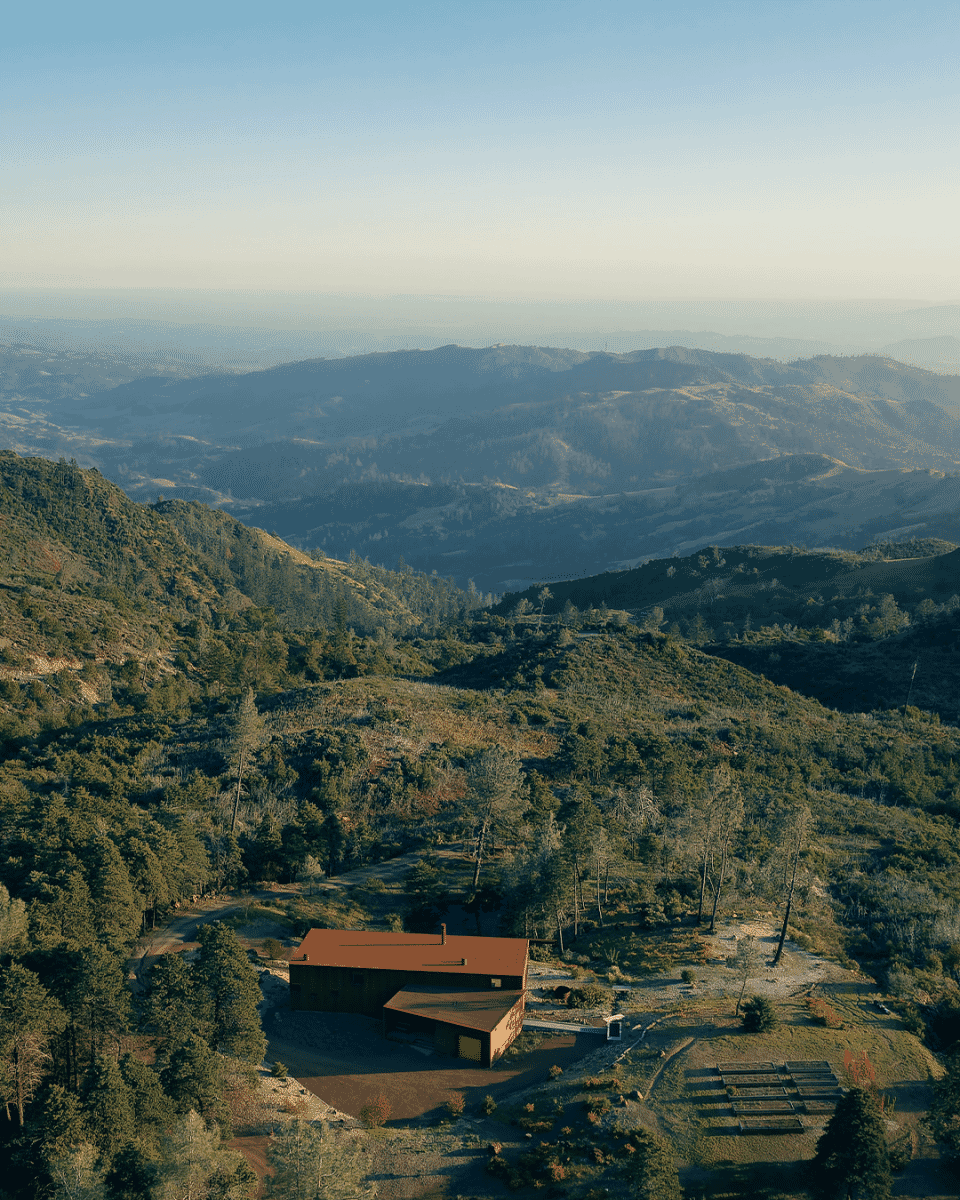
The road to Pine Flat bends slowly through the Mayacamas Mountains, tracing the path of an old stagecoach route north-east of Healdsburg. It is not the sort of place one arrives at by accident. The landscape feels deliberate in its vastness - dry grasses, oak woodland, distant ridgelines fading into smoke-blue horizon.
The original house on this off-grid site was lost in the 2019 Kincade Fire. In its place stands a residence shaped not by nostalgia, but by a deeper attention to land, risk and time. Rather than retreat from the landscape, the clients chose to remain in dialogue with it, drawing inspiration from the nearby historic Pine Flat community, a short-lived 1870s boomtown born of the quicksilver rush. Resourcefulness, then and now, became the through-line.
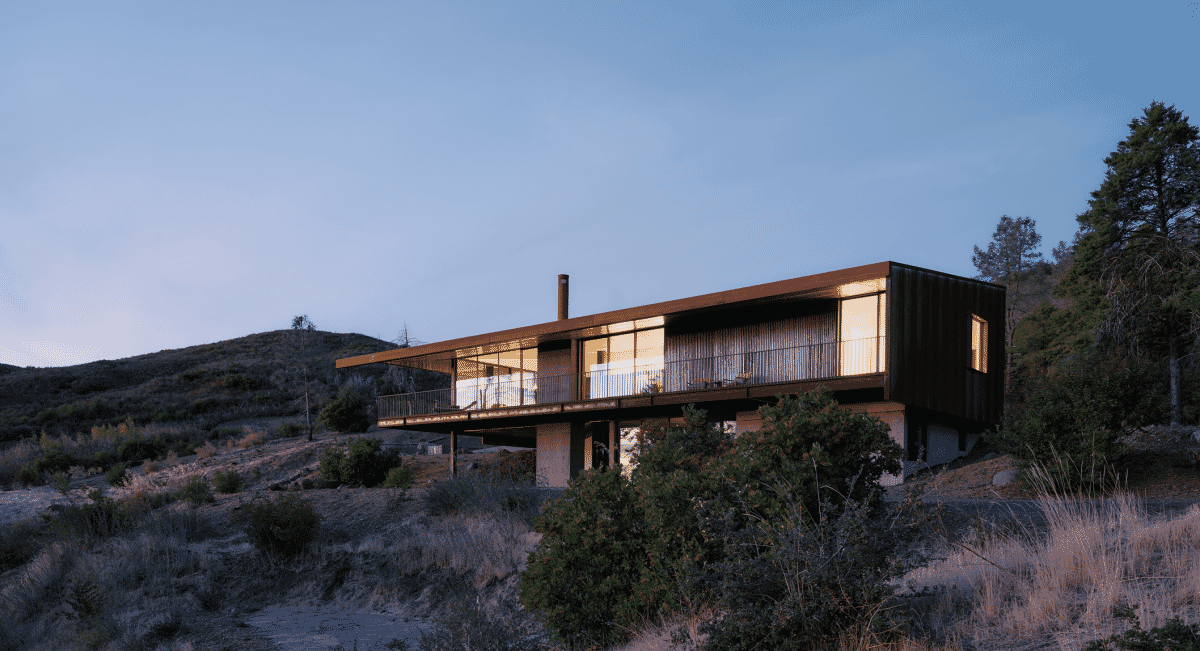
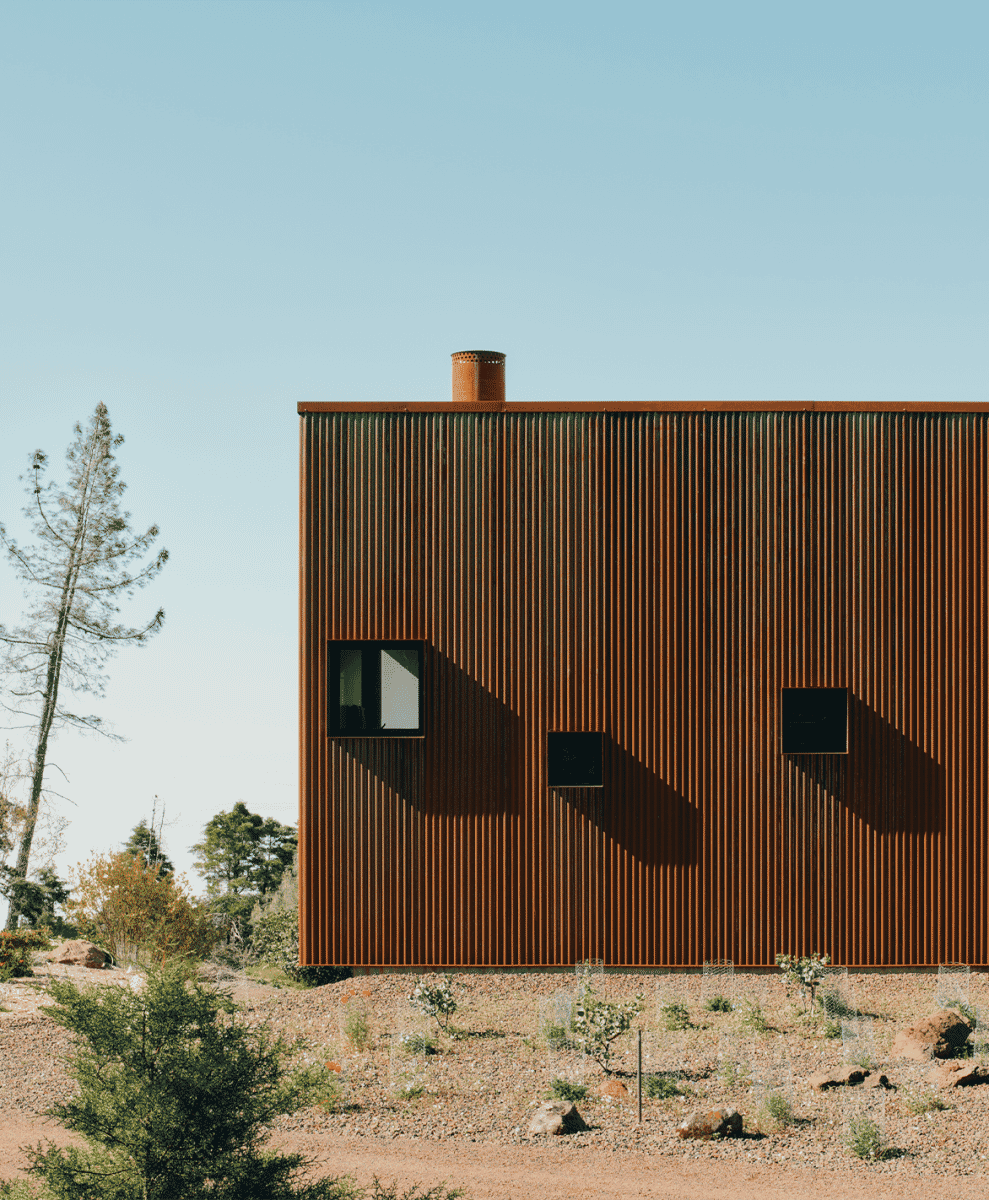
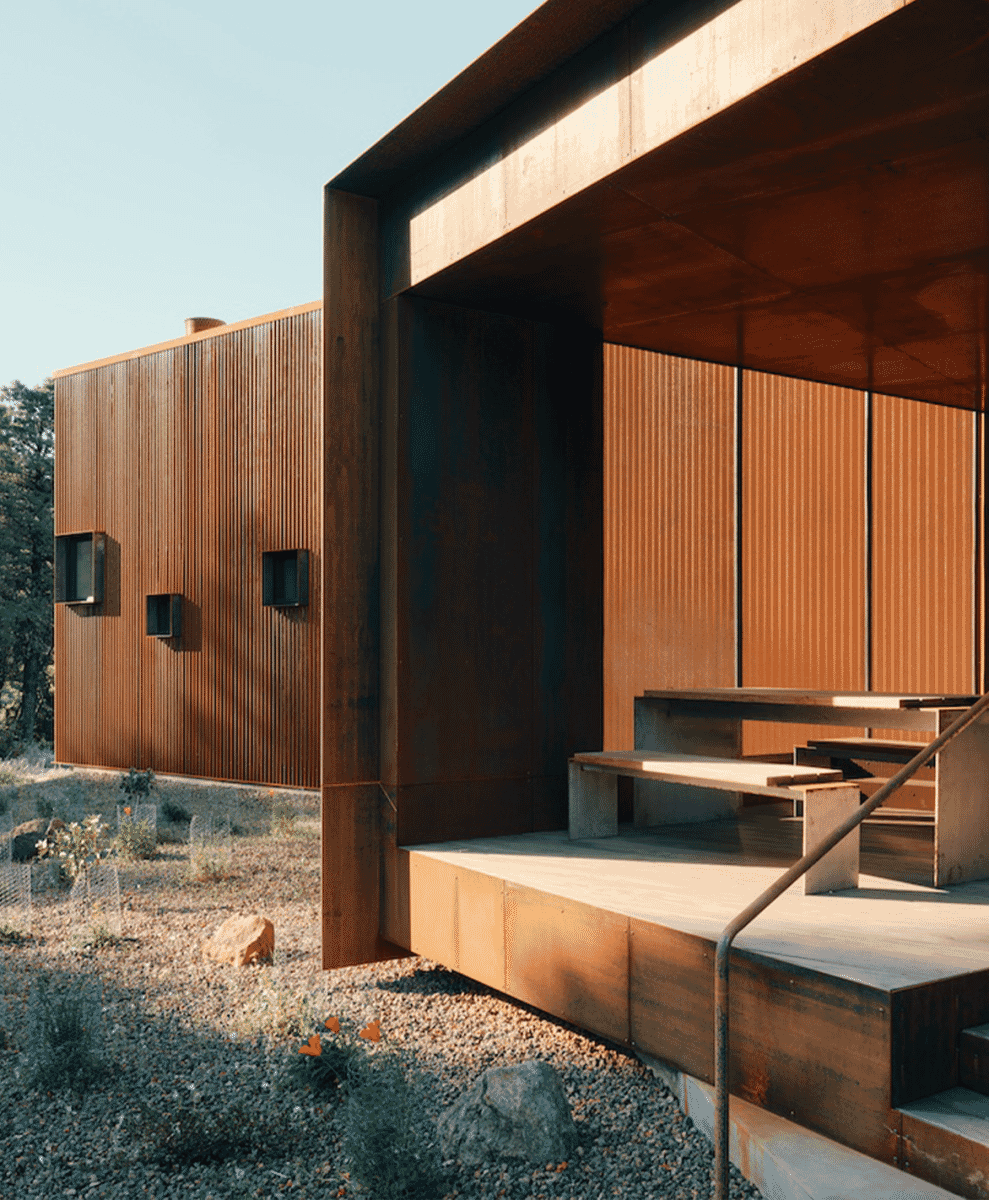
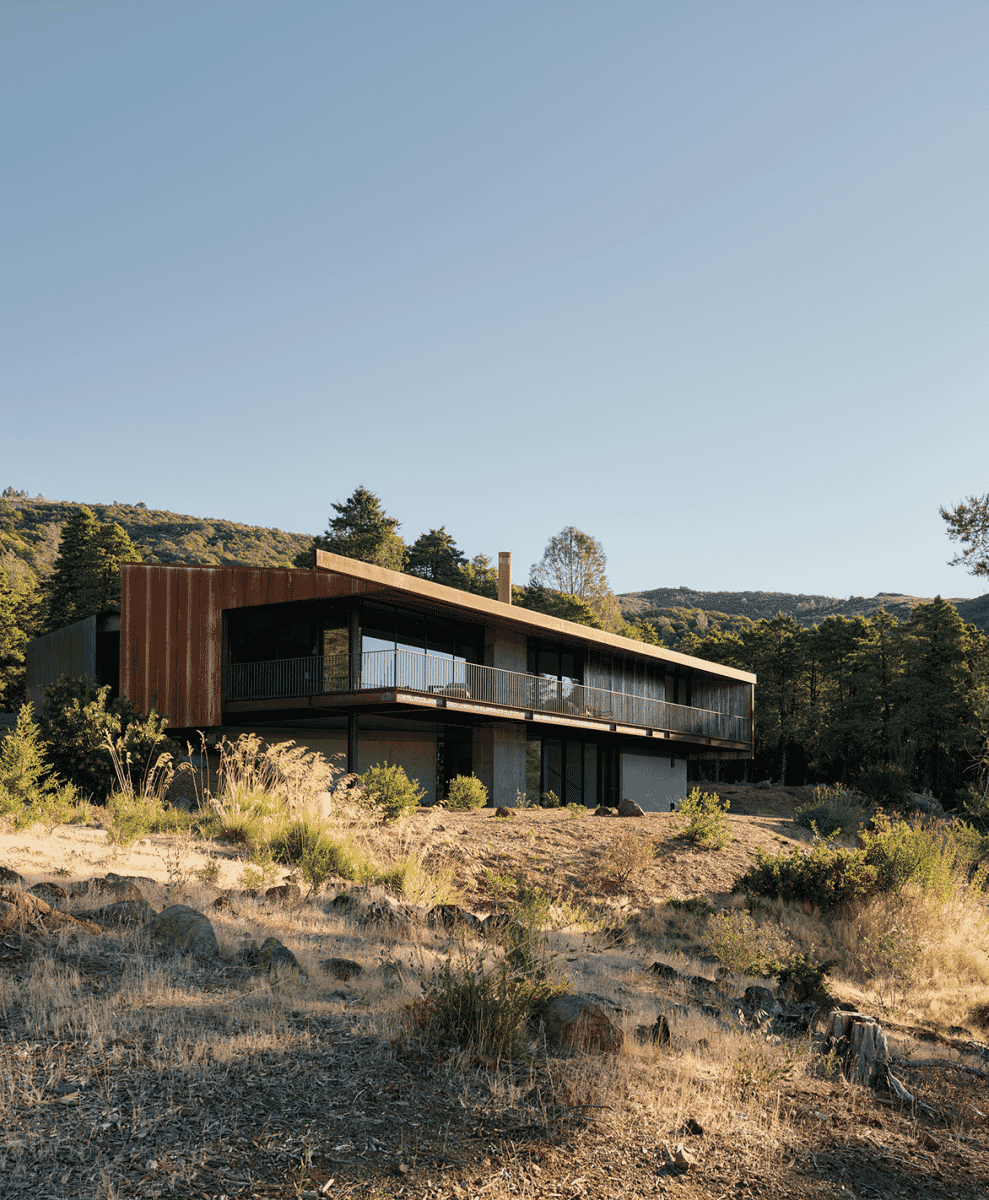
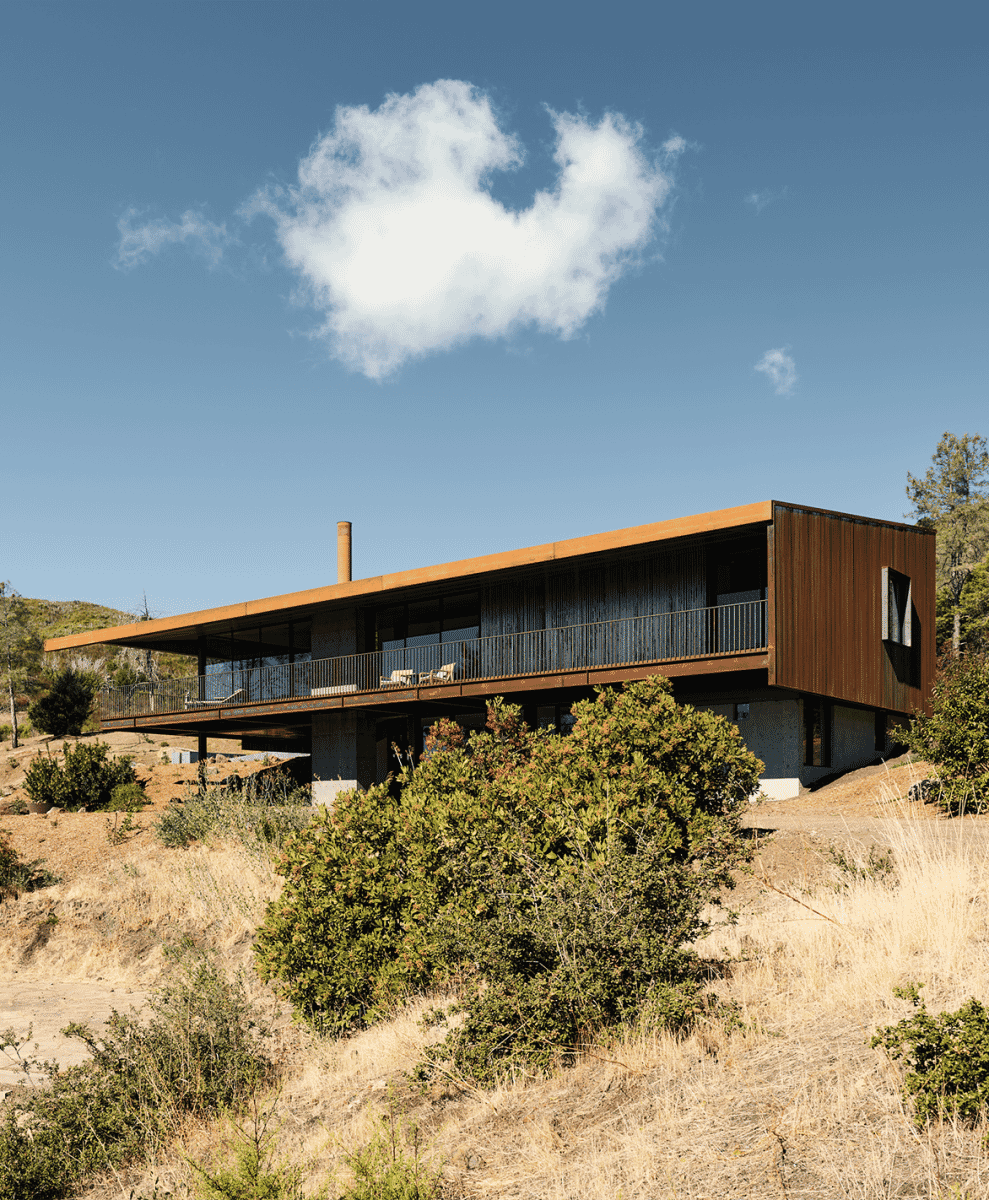
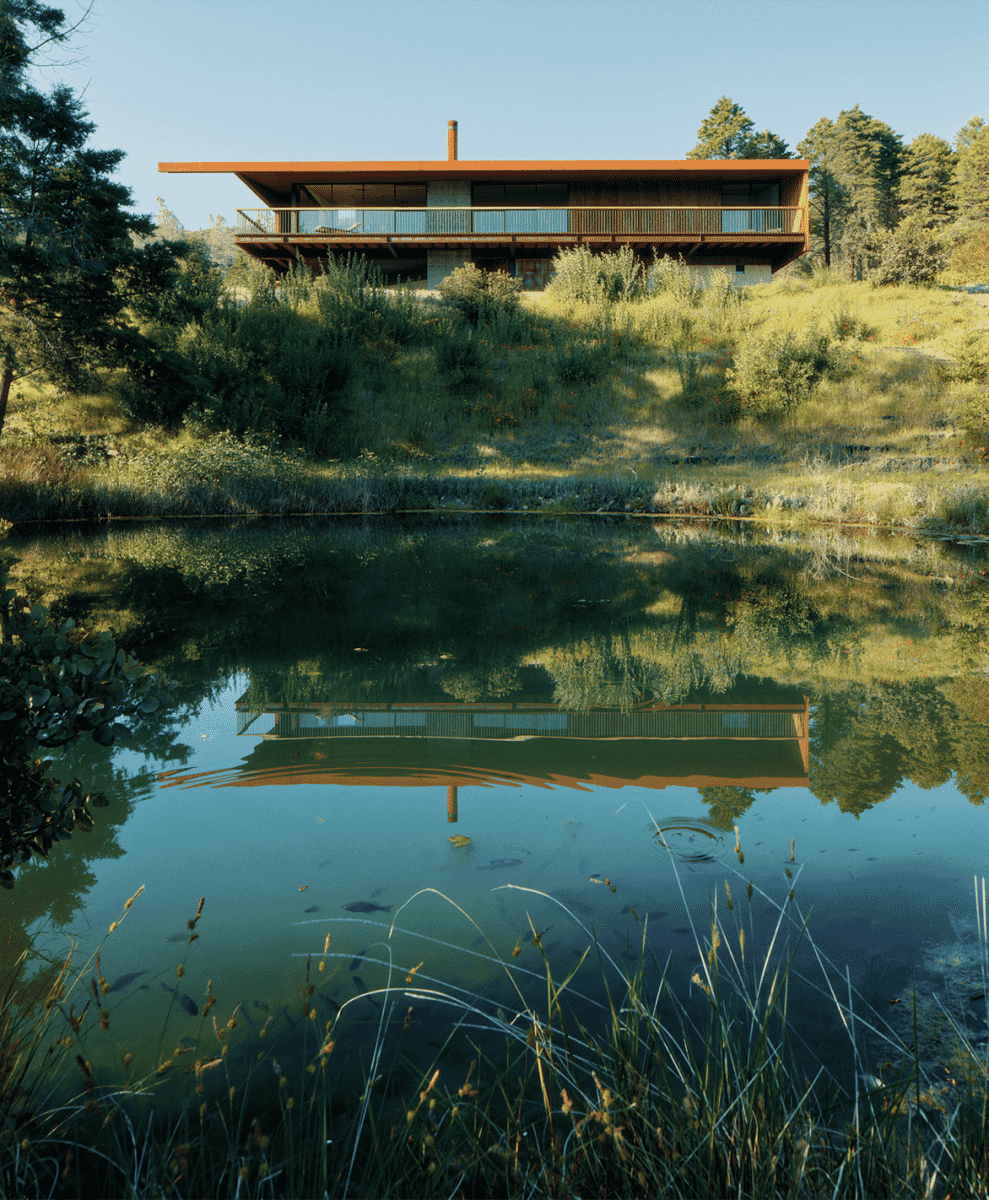
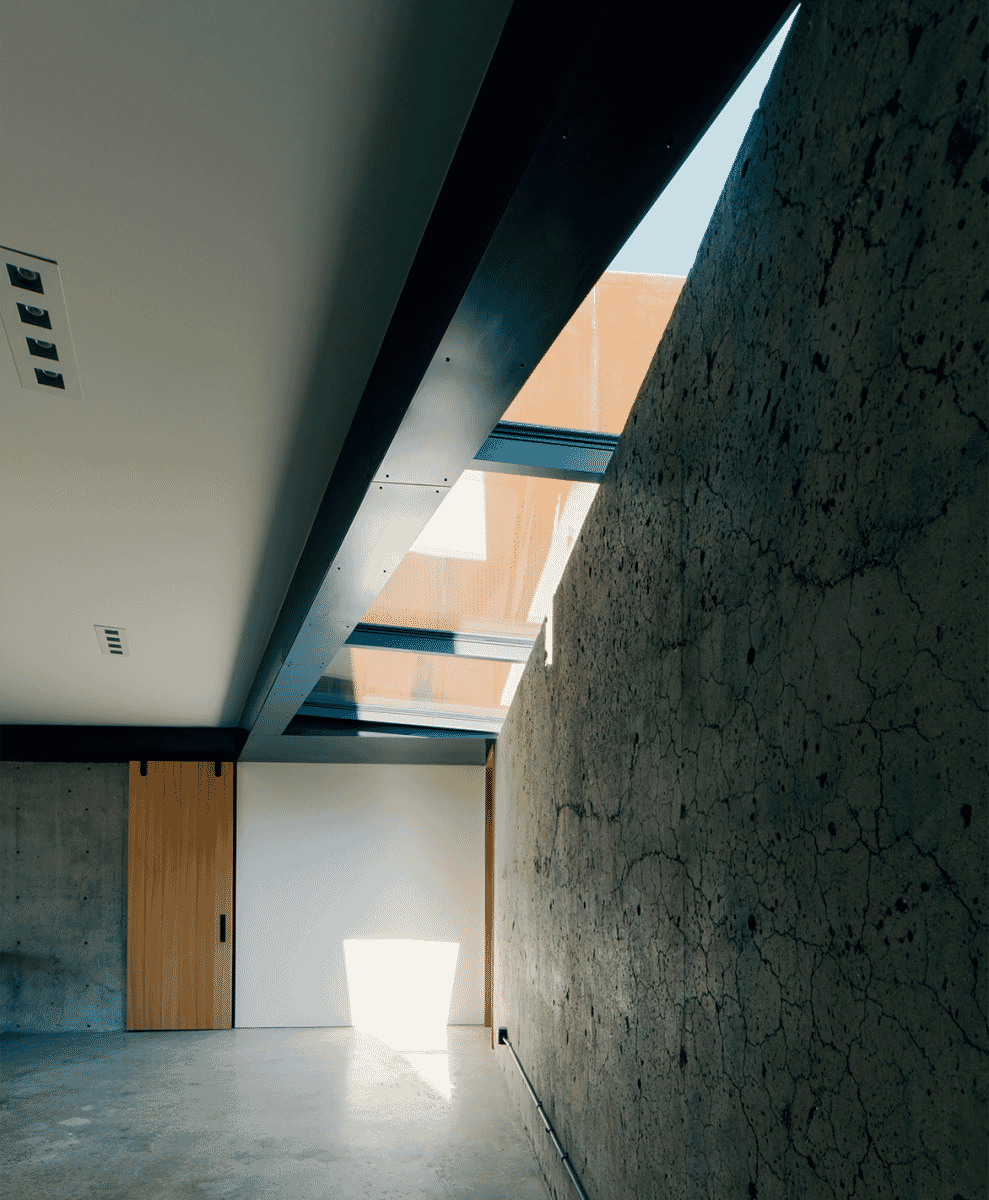
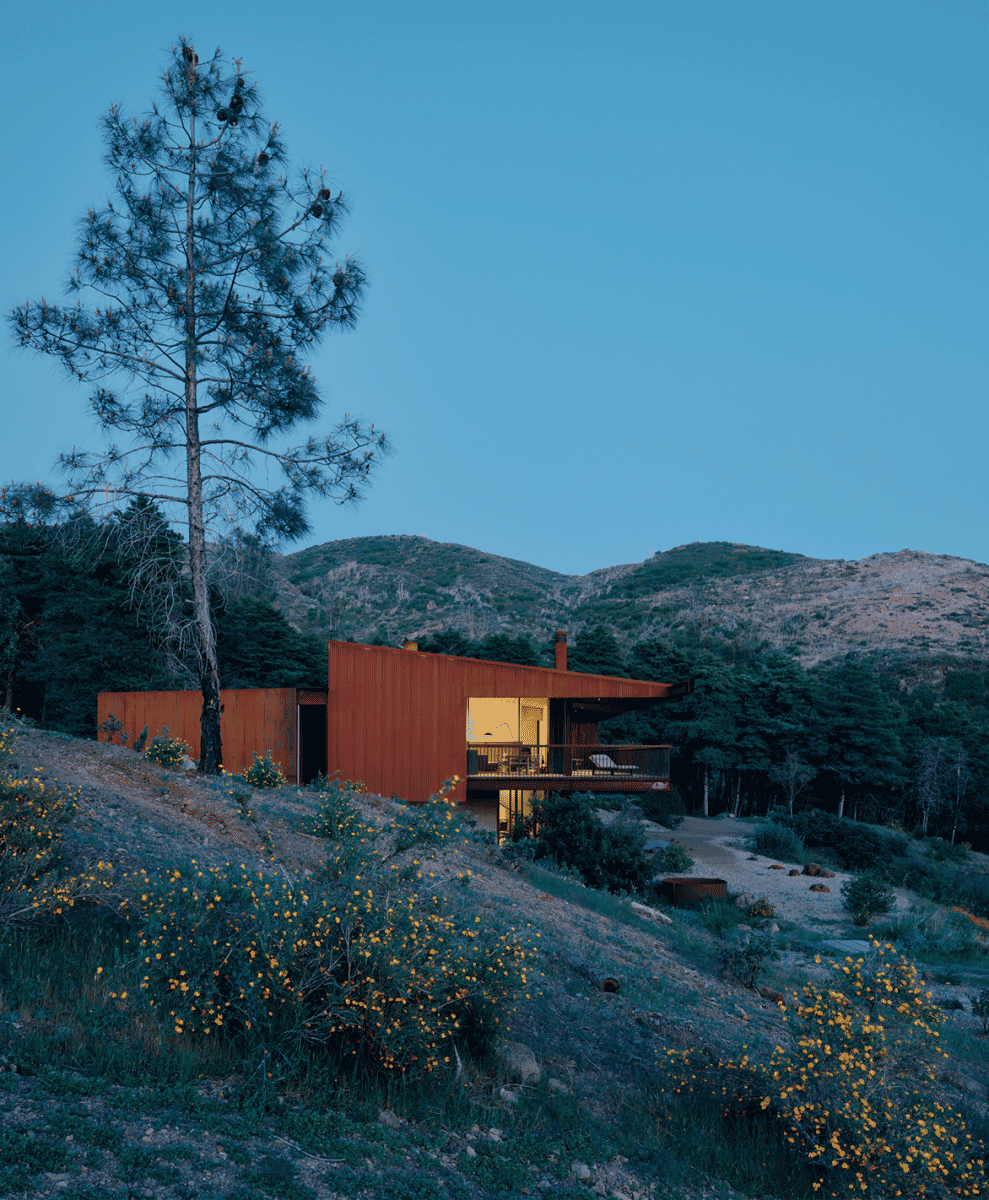
The new house occupies 90 percent of the existing concrete foundation, preserving embodied energy and limiting further excavation into the hillside. Where the former structure was angular, a simple rectangular shed form now rests within its outline. Portions of the old foundation extend beyond the new geometry like the trace of a leaf, becoming a sculptural entry step and a glazed light well. Half buried into the slope, the preserved concrete base anchors the home, while the elevated structure above stretches outward in quiet counterpoint.
Wildfire realities
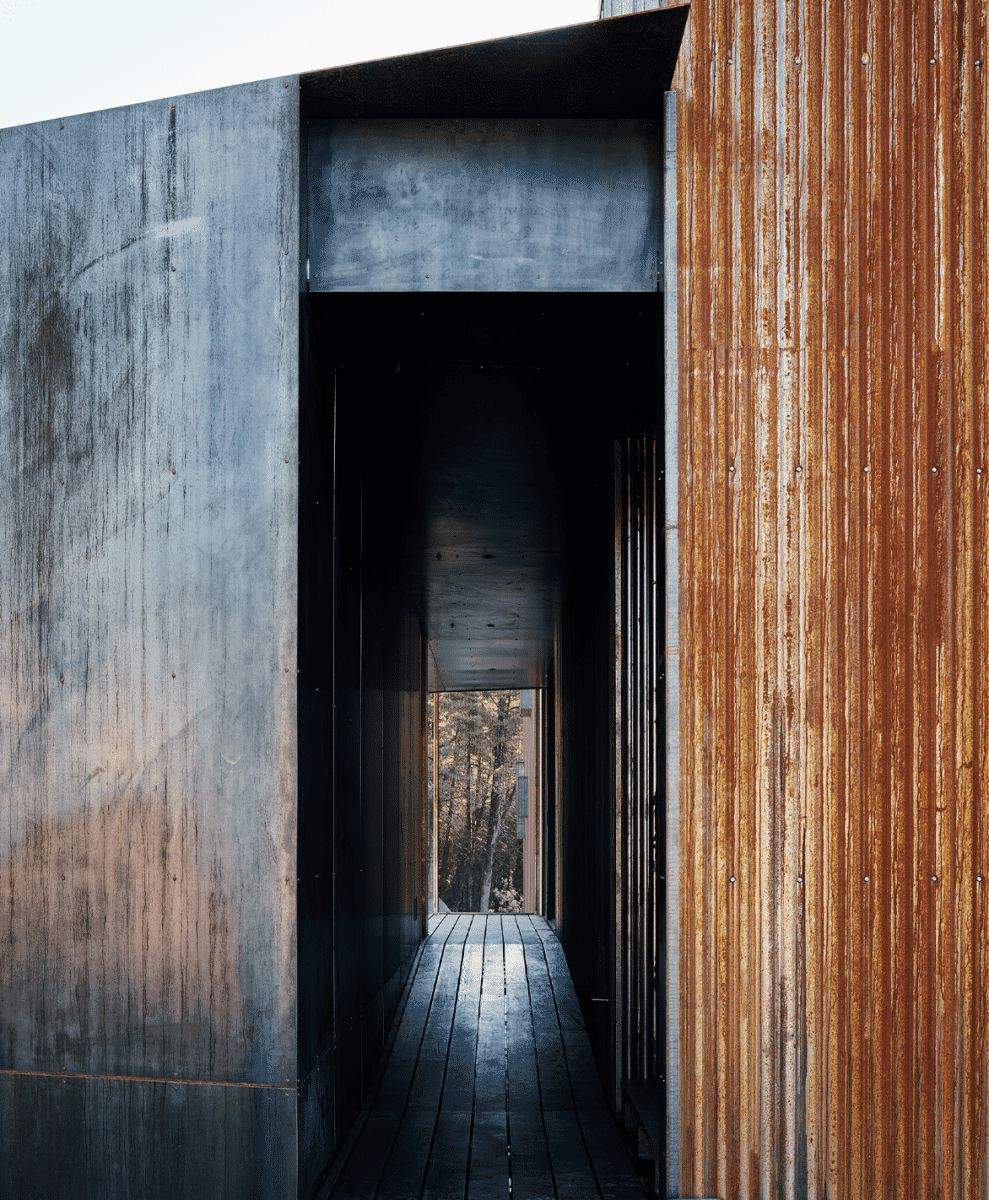
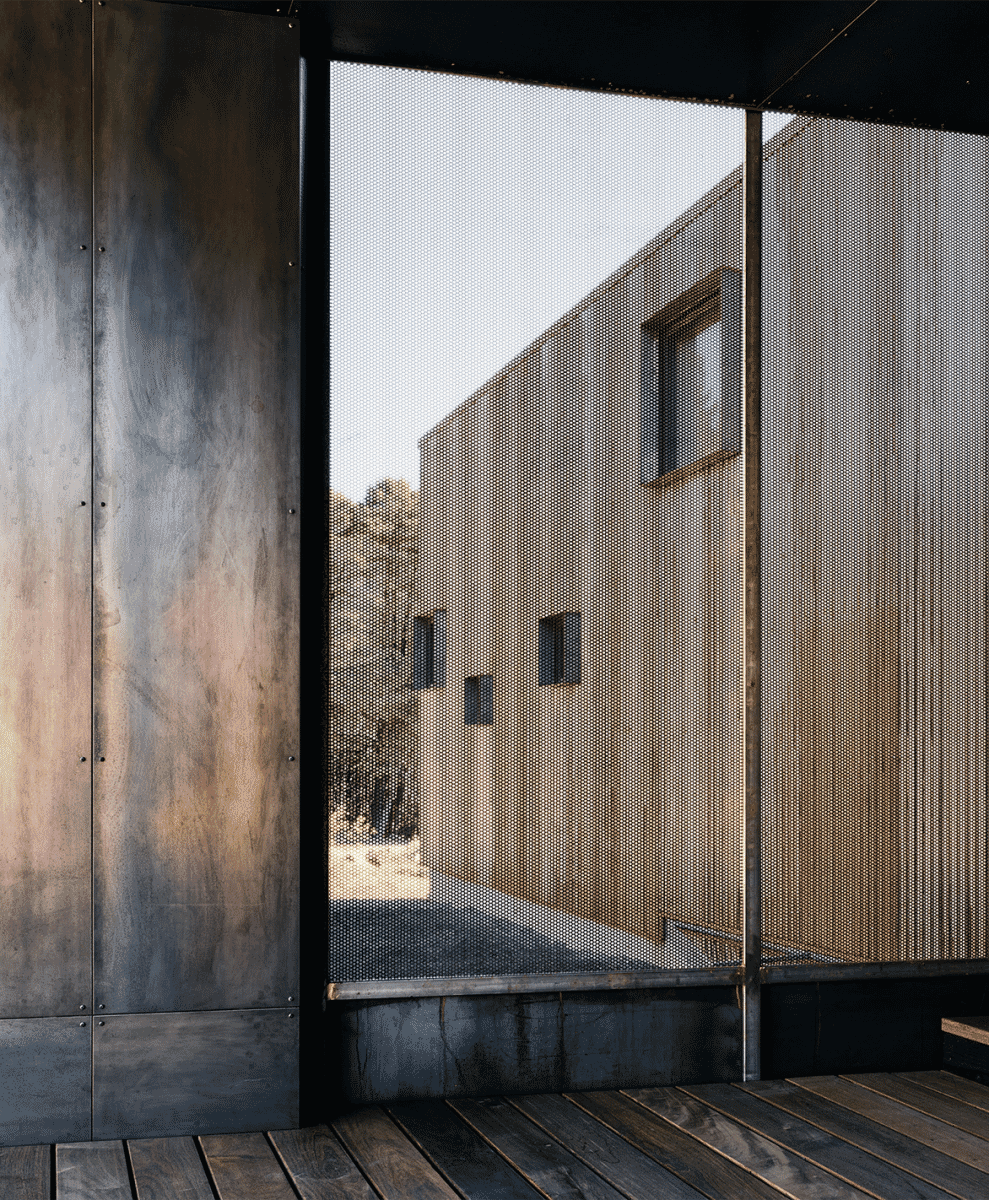
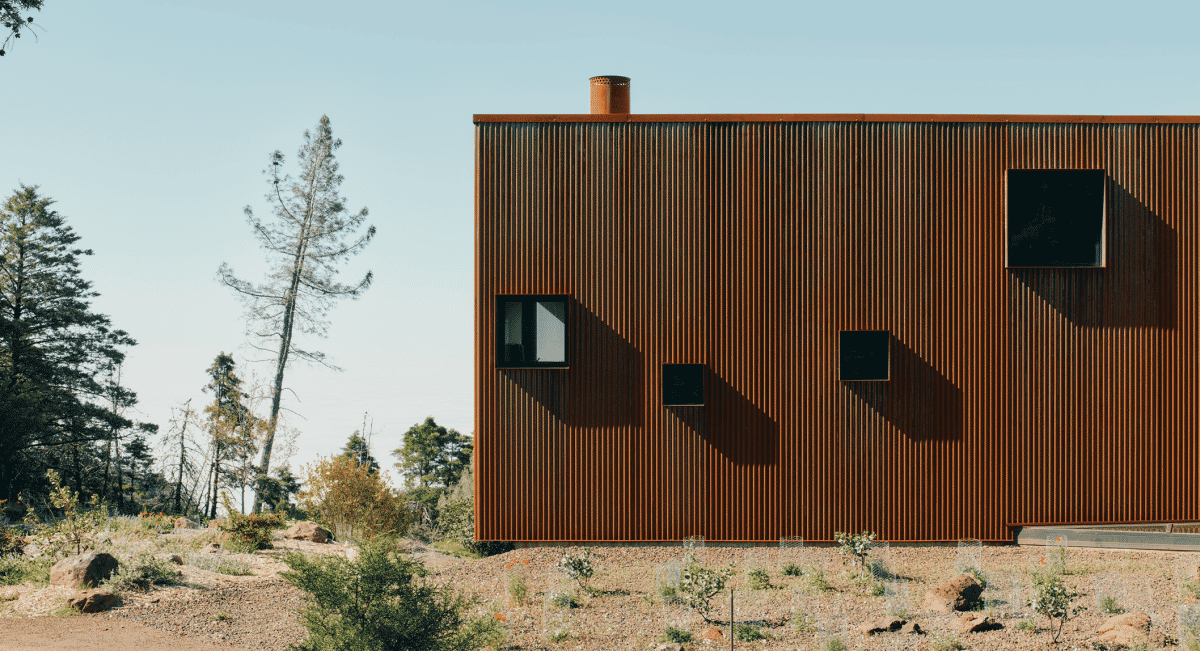
Clad in a fire-resistive corten steel shell, the exterior is both protective and restrained. Sliding ember screens and discreet sprinklers above the decks acknowledge the realities of wildfire without turning the house defensive in spirit. The form runs parallel to the ridgeline, maintaining a low, steady profile against the terrain. It does not attempt to dominate the site. It holds its ground.
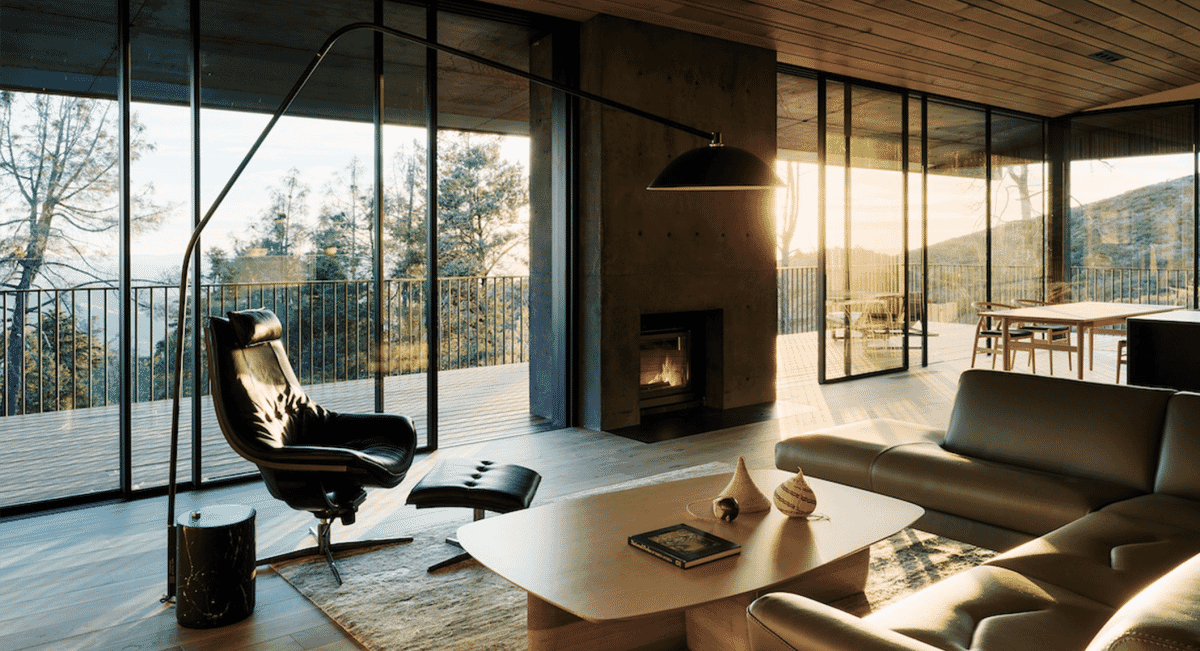
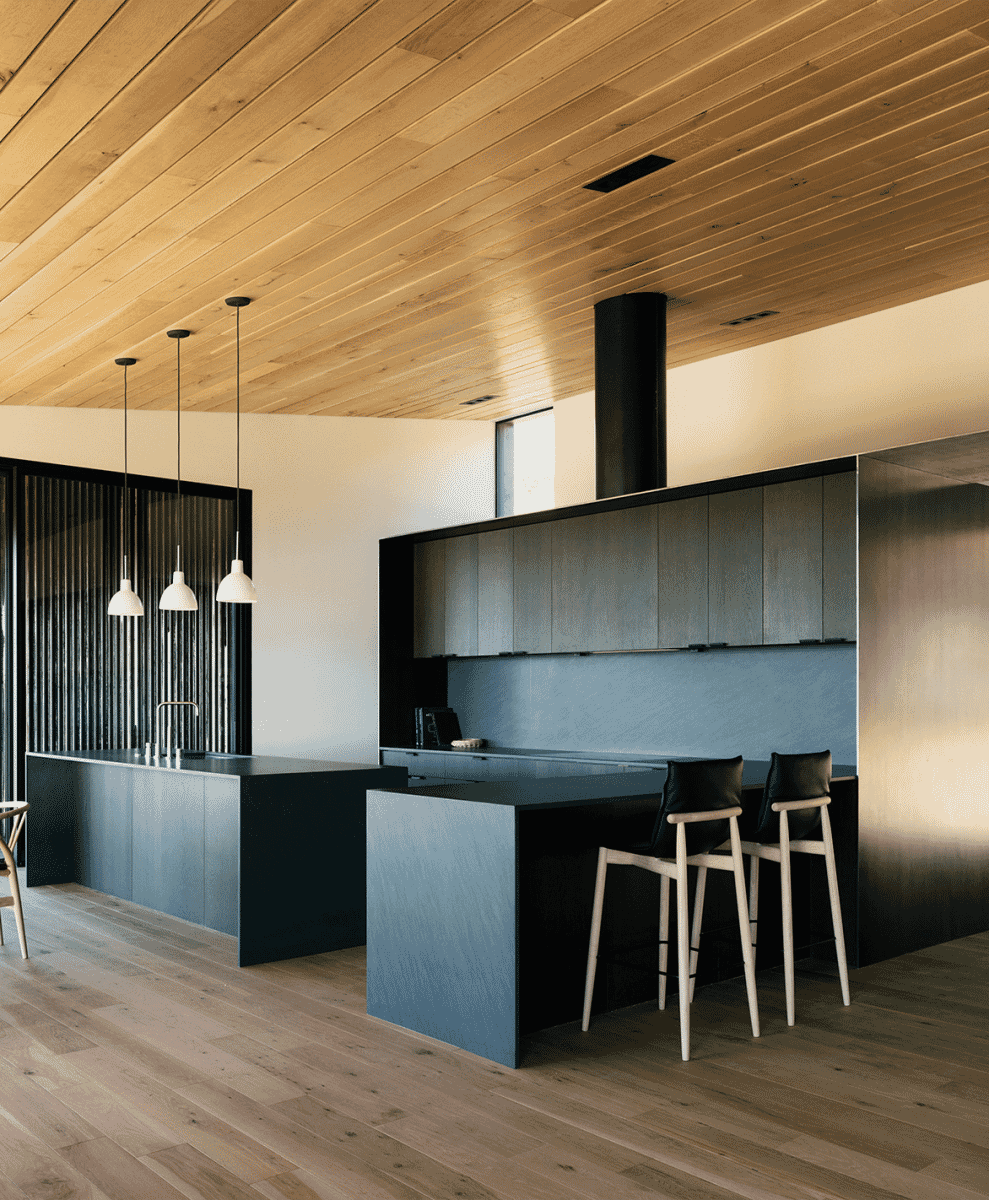
Inside, the main living spaces - kitchen, dining and sitting area - sit alongside the primary bedroom on a single level, allowing the house to adapt as its occupants age. An entry ramp extends westward toward the hillside, doubling as both access and gesture. Wheelchair clearances are integrated seamlessly, and a future elevator has already been accounted for within the structure. Accessibility here is not an afterthought but part of the architecture’s logic.
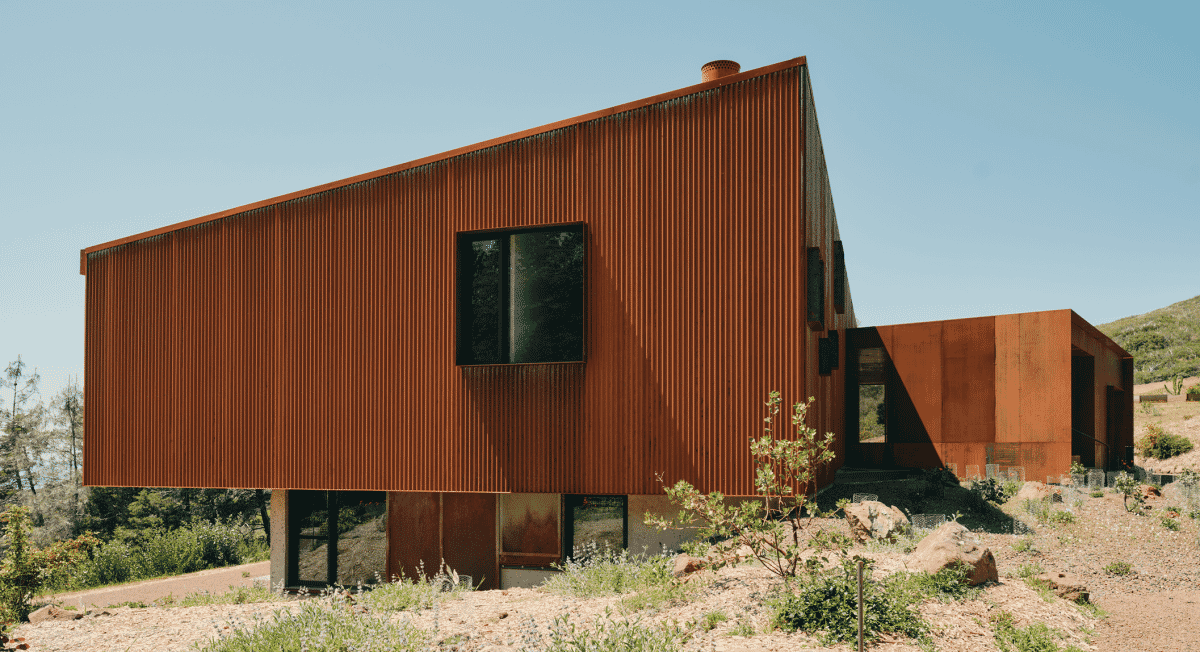
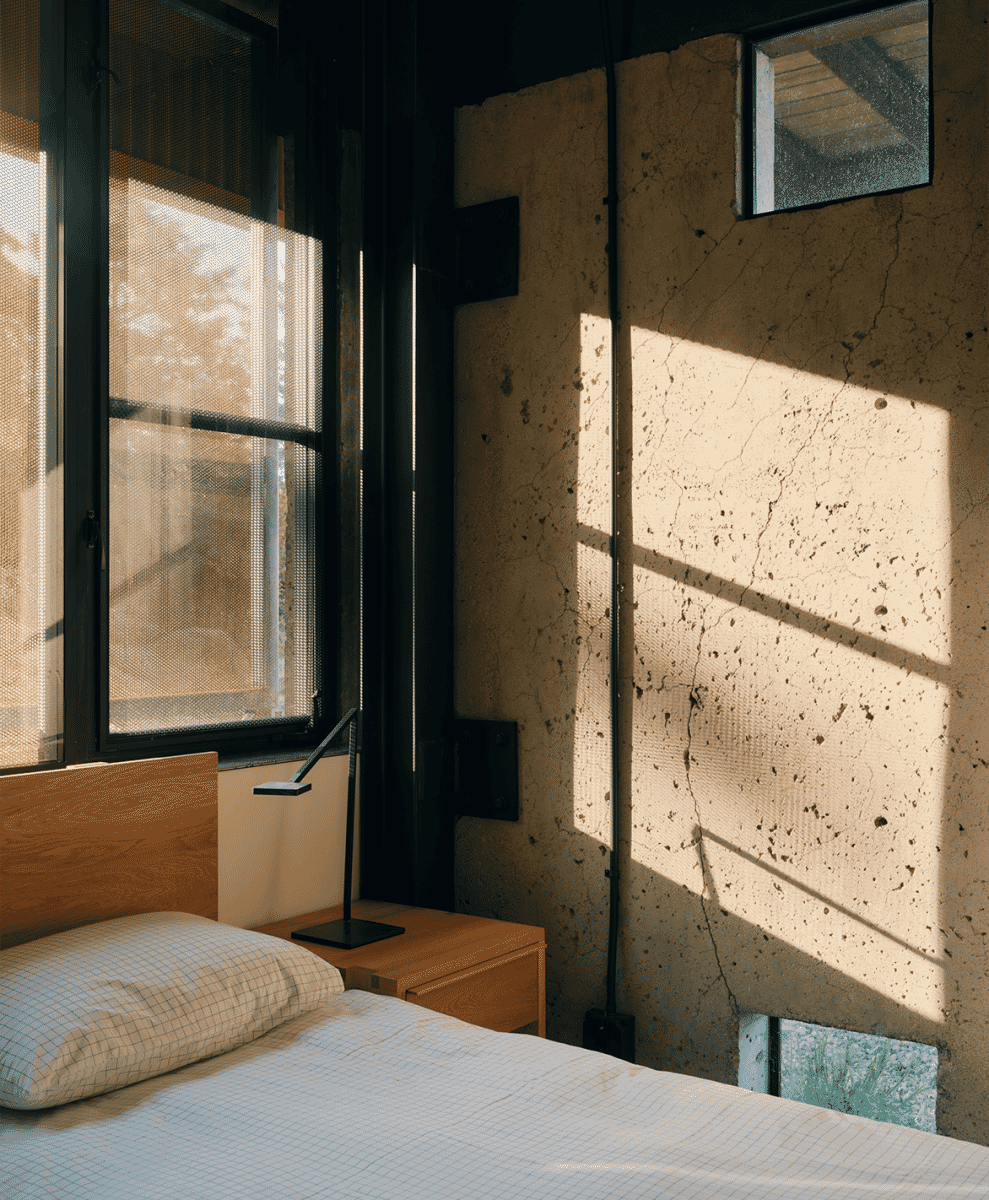
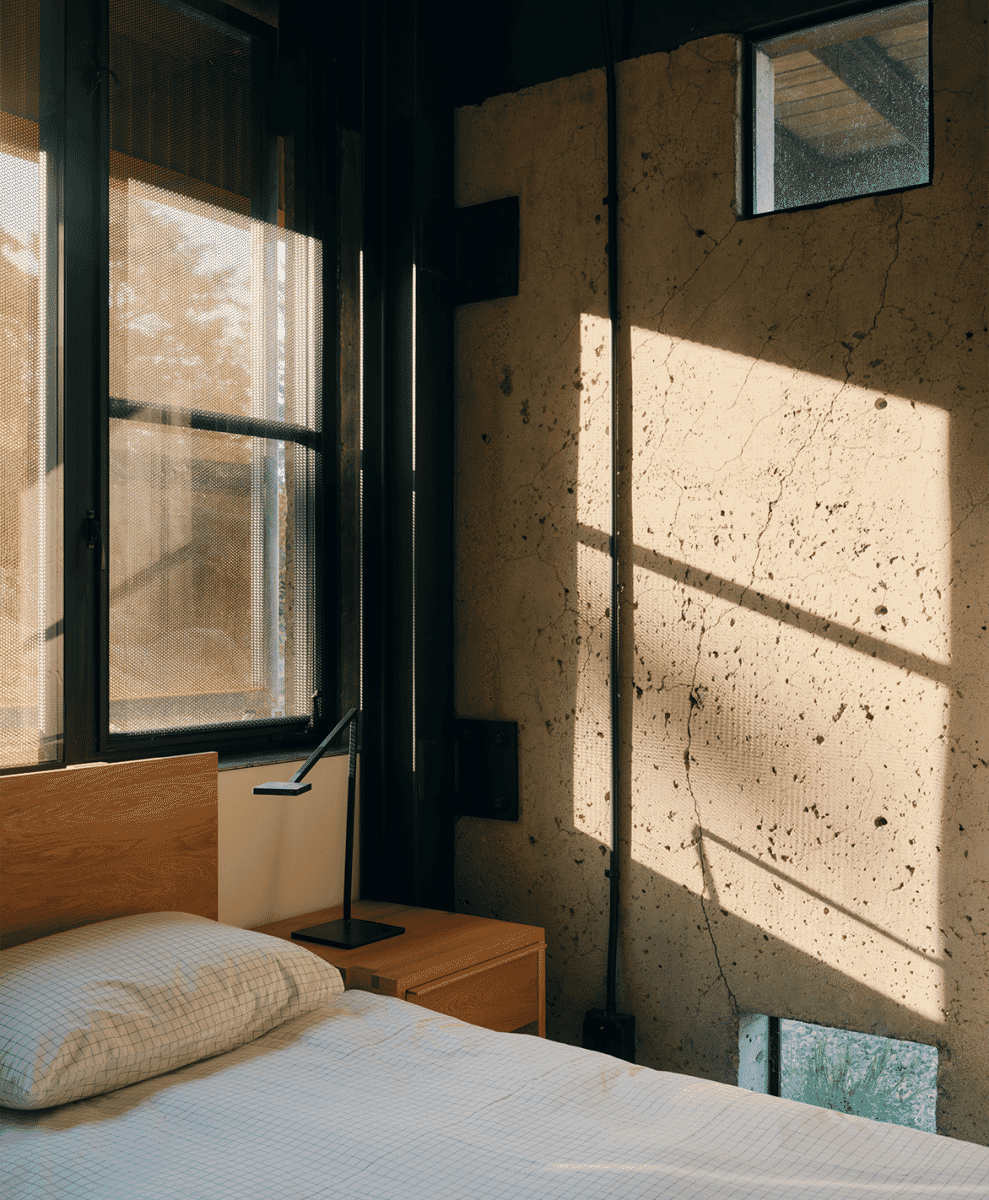
A new concrete chimney rises through the centre of the plan, anchoring the main floor. Its mass frames a view of fire within the hearth, a reminder of both comfort and danger. Beyond, wide openings draw the eye across the valley. The relationship between interior and exterior is continuous but measured. The house offers shelter without severing connection.
Fire and water
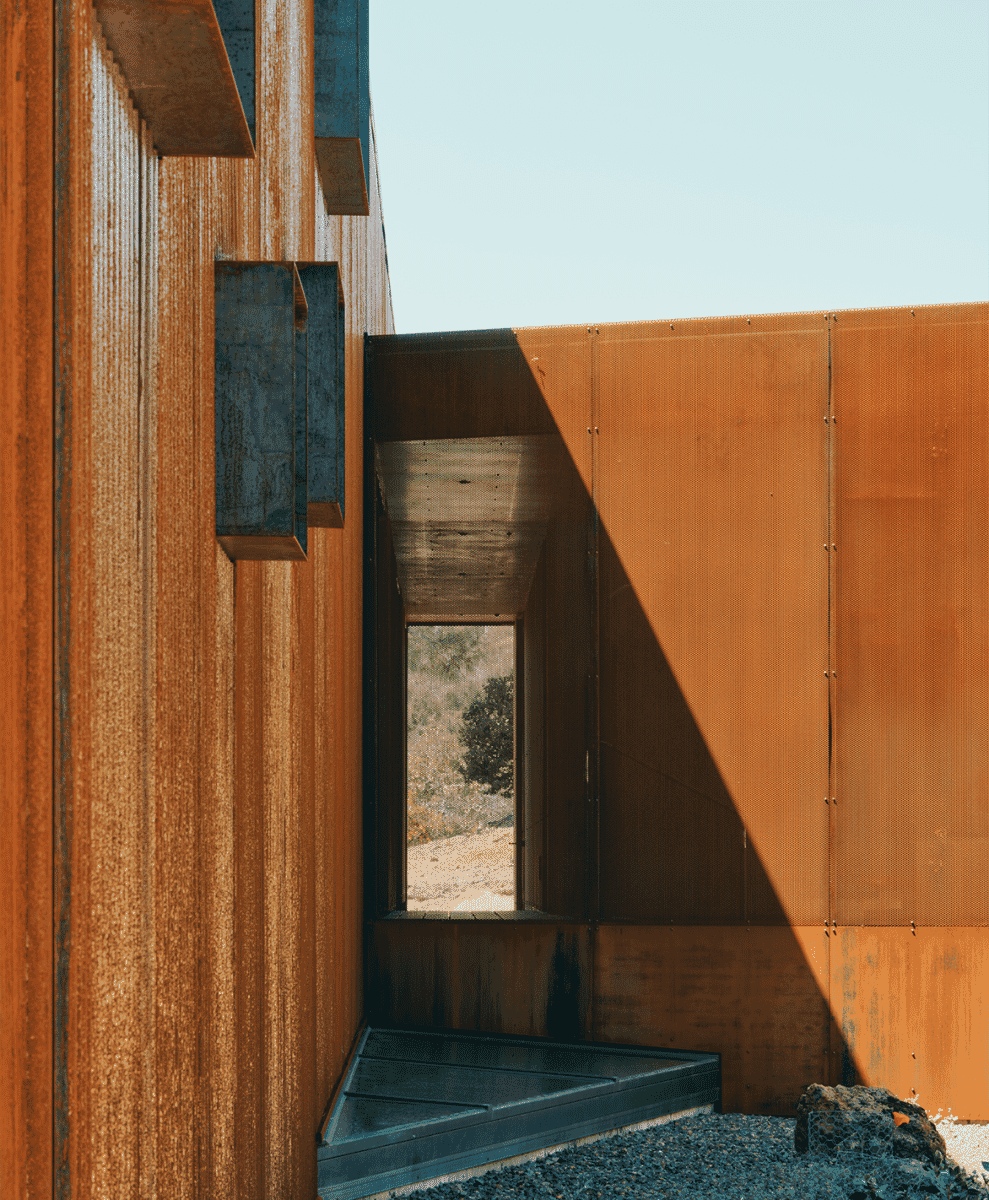
Water shapes much of the site’s daily rhythm. A cantilevered gutter directs rainfall into a steel basin before it passes through a vegetated bioretention area and down to a retention pond, which doubles as a backup firefighting resource. One hundred percent of stormwater is captured and held on site. Spring-fed wells provide domestic water and supply a dedicated tank for hydrants and sprinklers.
Before entering the concrete basin, water turns a Pelton wheel, generating supplementary hydroelectric power. The basin itself becomes a cooling pool, replenished continuously. It reads as both infrastructure and ritual - an artefact of survival that also invites pause.
The existing solar array has been replaced with upgraded panels, inverters and batteries, reinforcing the home’s off-grid resilience. Wastewater is treated through a repaired septic field. Each system is visible in its intent, if not always in its detail. Materials carry a certain gravity, informed by remoteness and the practical limits of transport. Nothing is gratuitous. Nothing is wasted.
A product of environment
There is a temptation, when writing about houses in California, to focus on views and light alone. Pine Flat resists that impulse. Its beauty lies in its pragmatism. The house is a tool for living in a volatile landscape - one that recognises both fragility and endurance.
As development continues to press into wild terrain, architecture must become more than aesthetic proposition. It must anticipate disruption. It must preserve energy where it can. It must withstand heat, wind and time. Pine Flat does not promise safety in absolute terms. Instead, it offers preparedness shaped by humility.
Next up: 5 contemporary cabins for your daily dose of escapism.