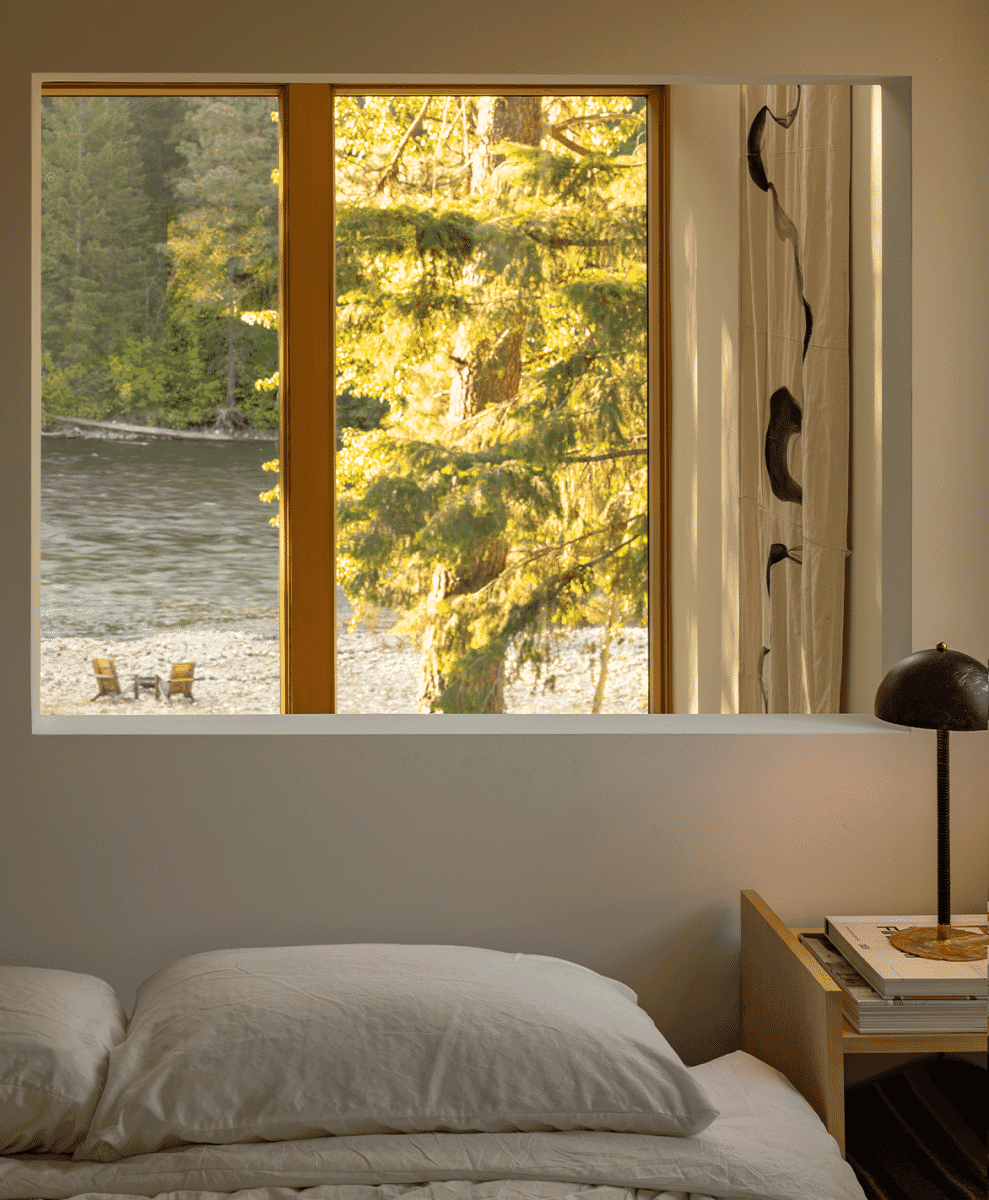
Set on a half-acre plot beside the Wenatchee River in Plain, Washington, this modest cabin began life not as an architectural gesture, but as a campsite. For a decade, the owner pitched tents here, returning season after season with friends, learning the rhythms of the forest and the behaviour of the river. By the time he decided to build, just before the pandemic, the brief for architecture firm Wittman Estes was clear. Keep it small. Keep it simple. Let the landscape do the talking.
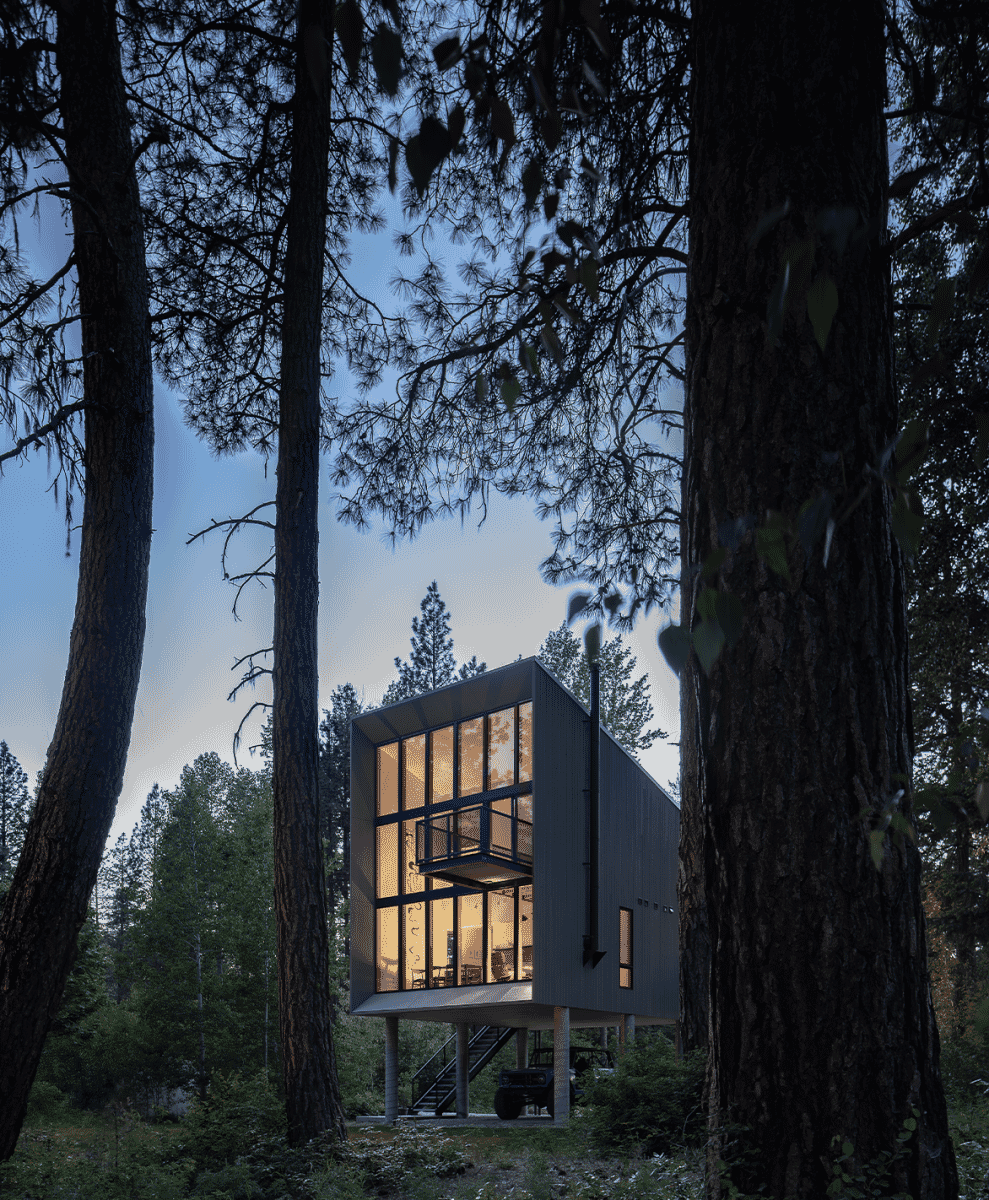
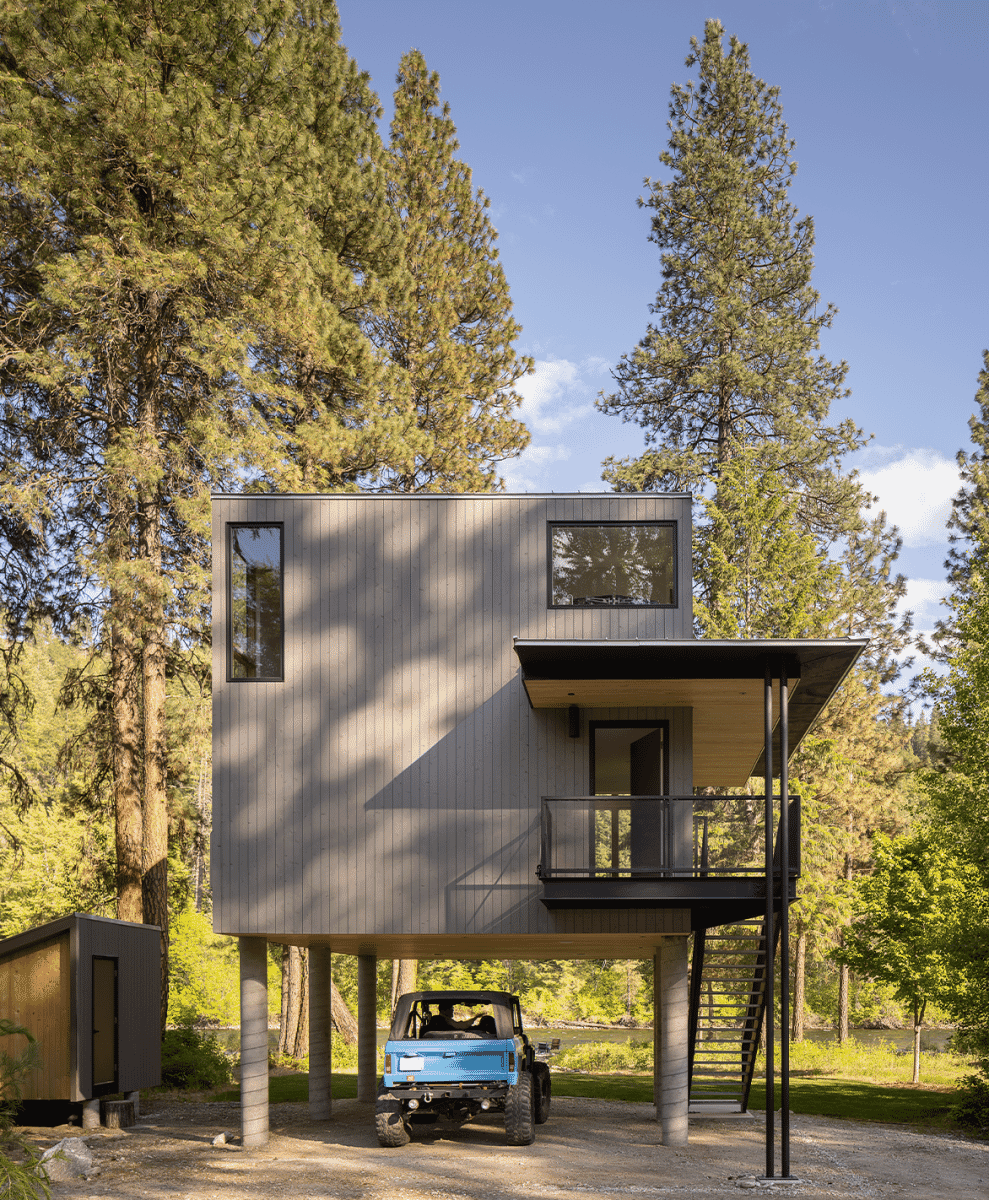
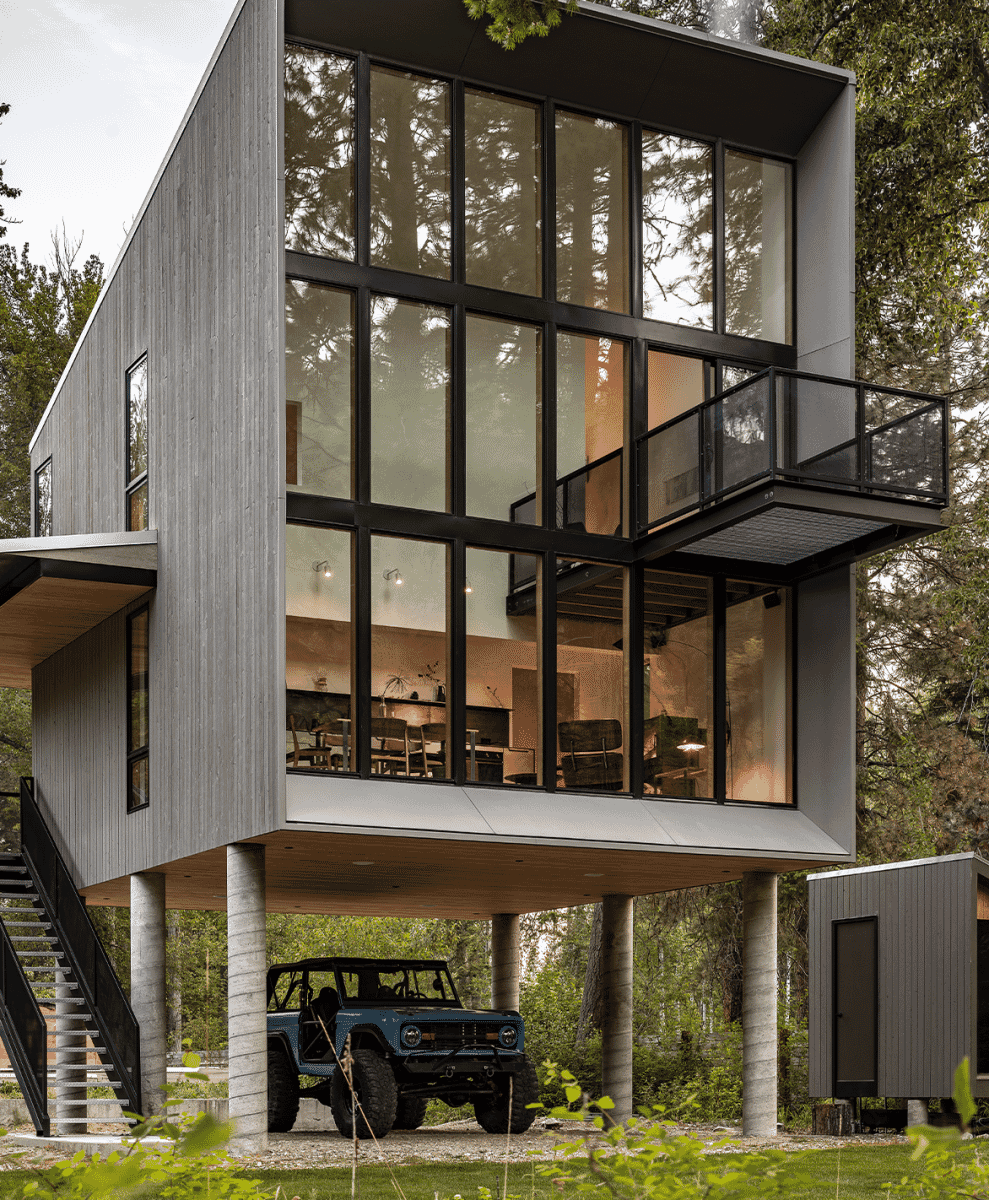
The result is a 746-square-foot, one-bedroom cabin shaped as much by necessity as by restraint. Sitting within the river’s floodplain, the structure is lifted ten feet above ground on six concrete columns, a pragmatic response that gives the building both resilience and lightness. Concrete and steel form the backbone, chosen for durability and ease of construction, especially important given the owner’s hands-on involvement throughout the build.
Wenatchee River Cabin: Levels
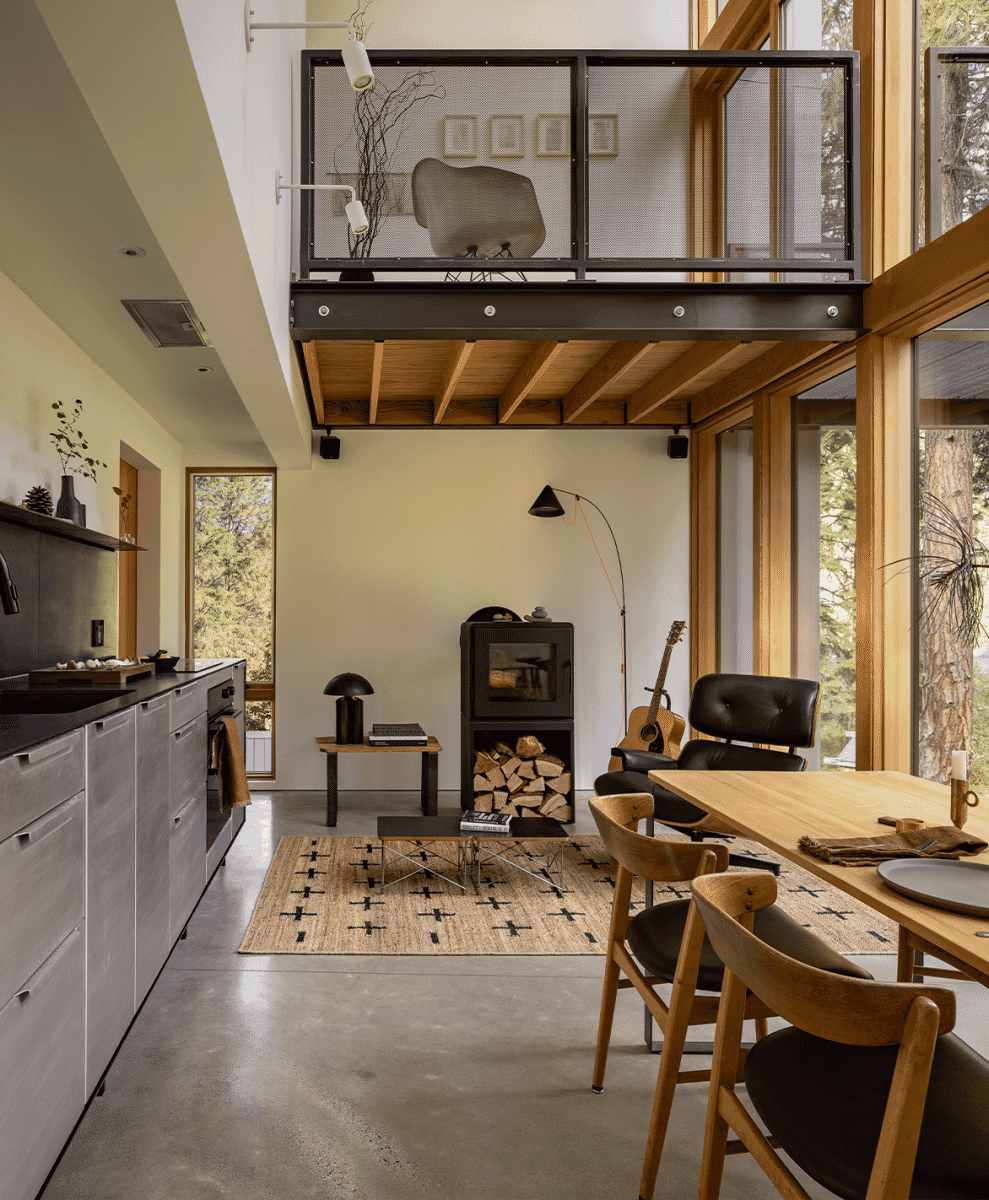
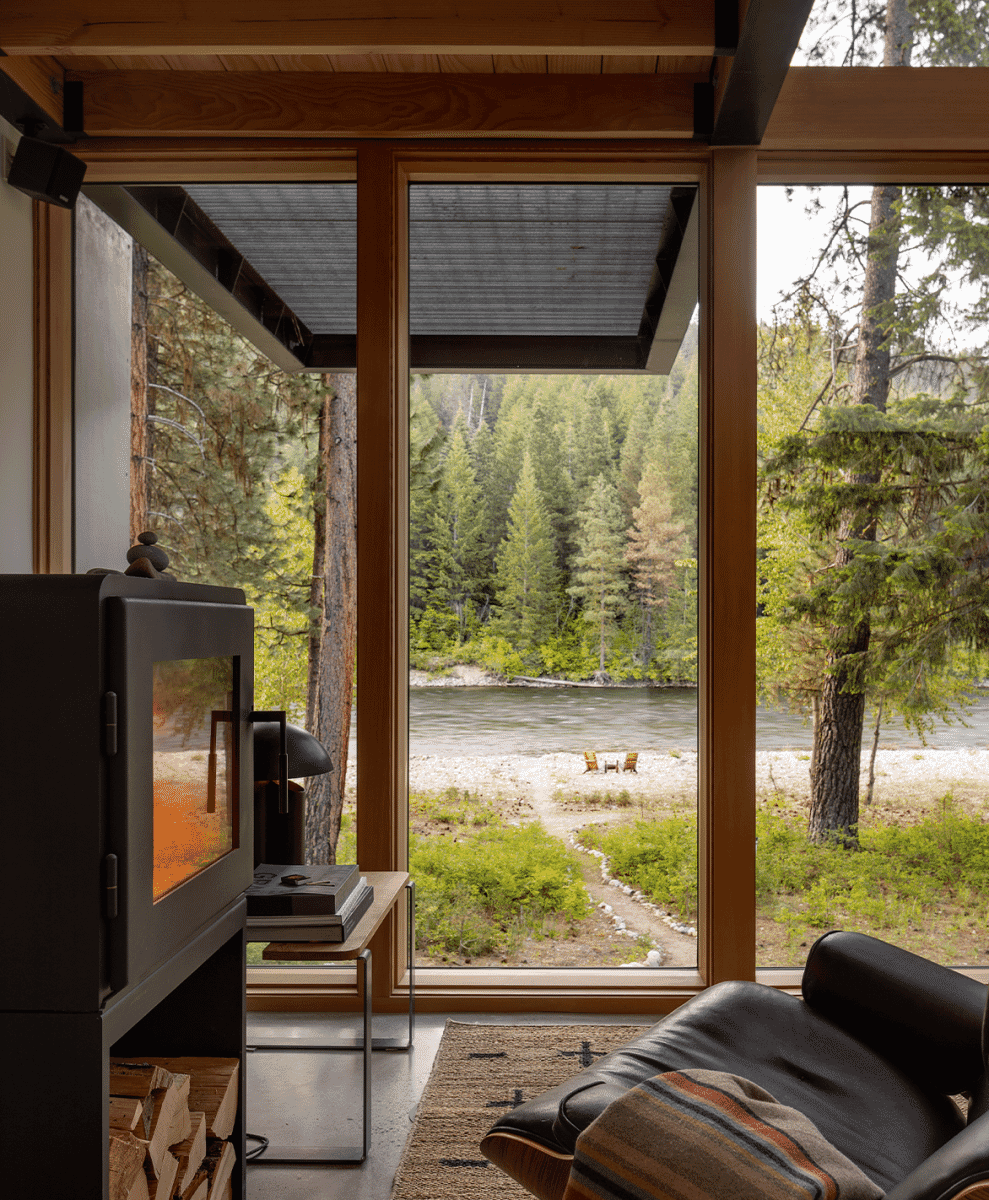
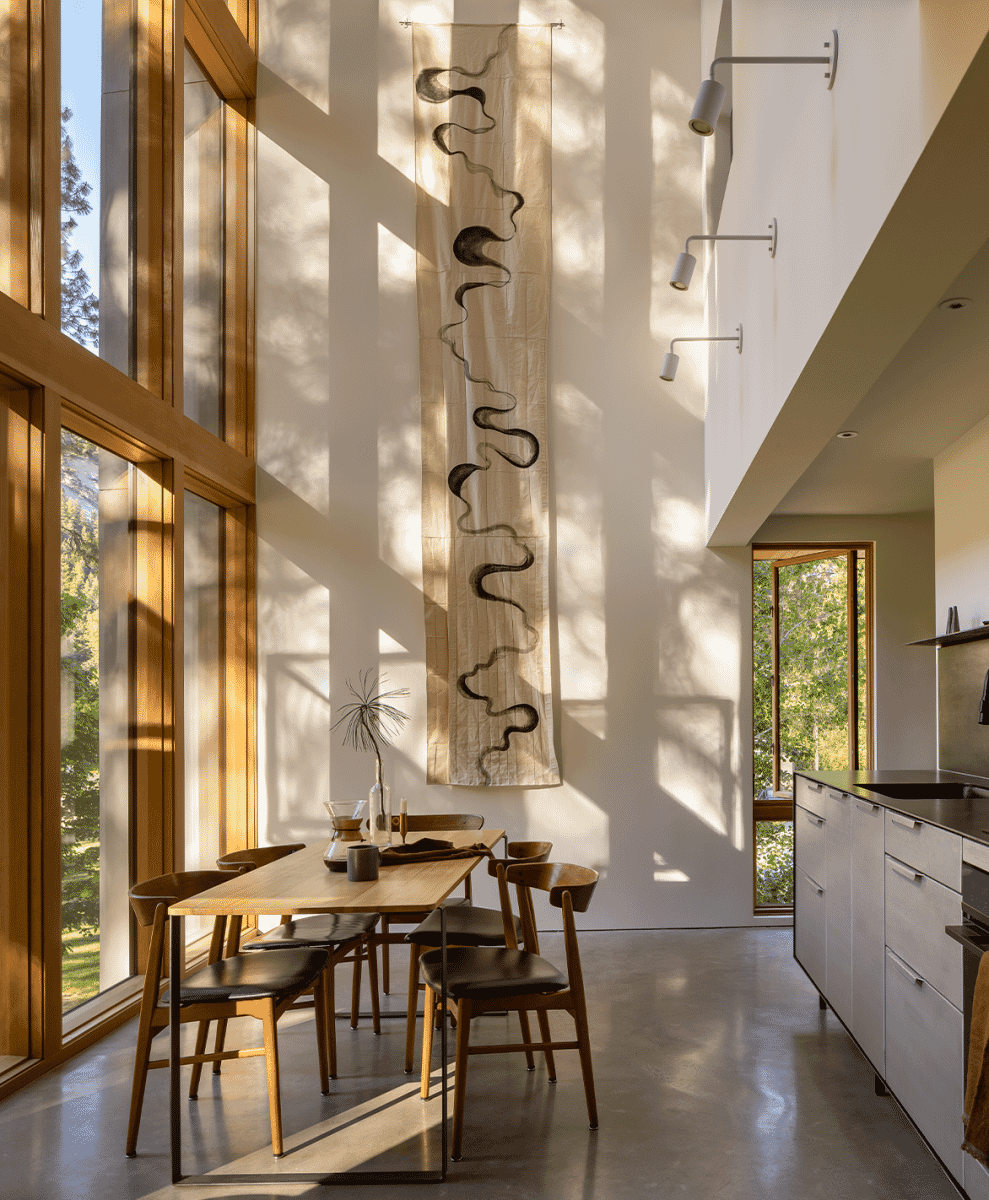
The programme is stacked across three levels. At ground level, a sheltered parking bay doubles as a workshop, offering space to tinker on a vintage Bronco away from the elements. Above, the main living floor is a single, open volume that combines kitchen, dining and living space, anchored by a wood-burning fireplace beneath a fir-framed loft. The top level houses the bedroom, a compact office, and a loft that opens onto a cantilevered steel deck.
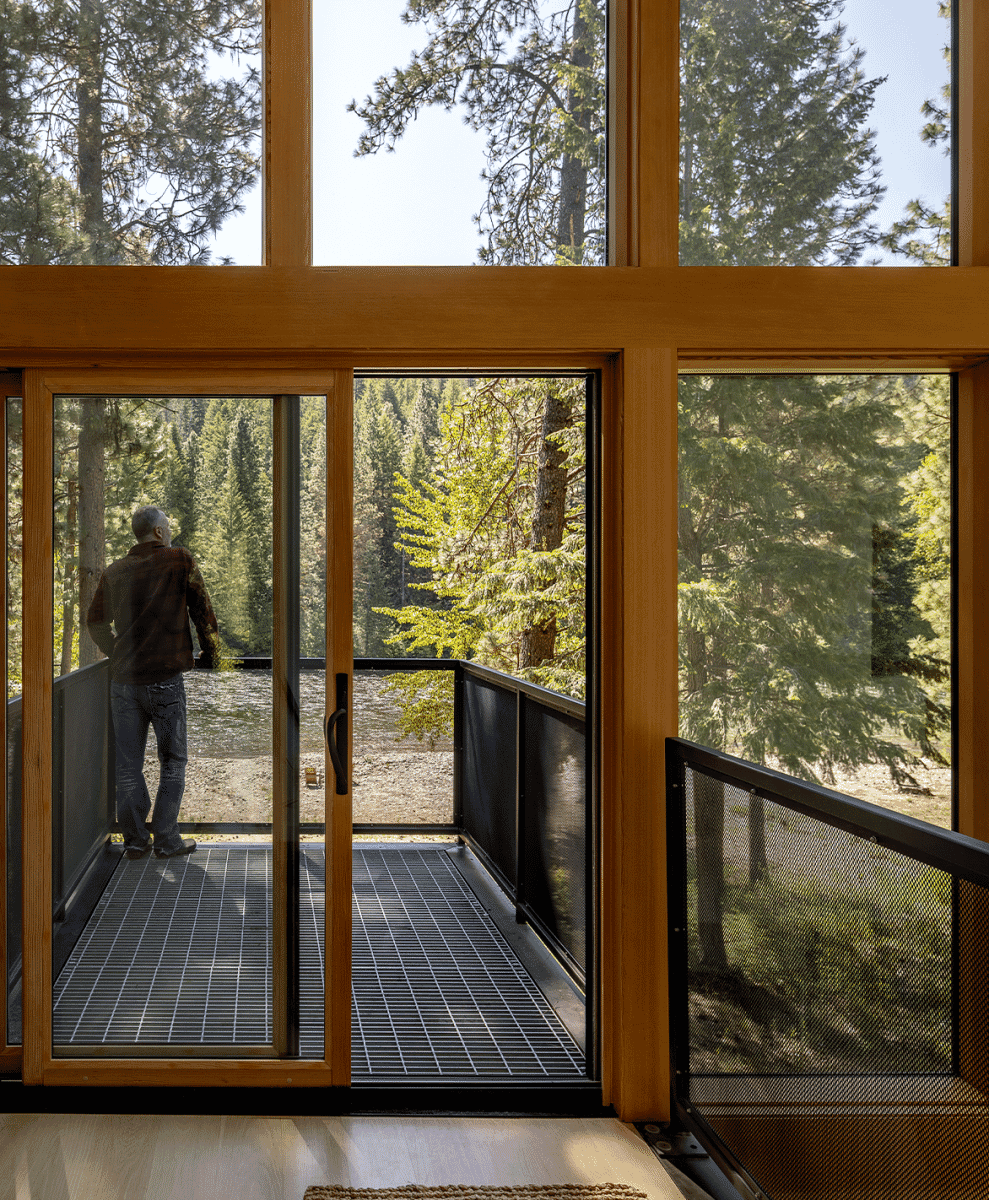
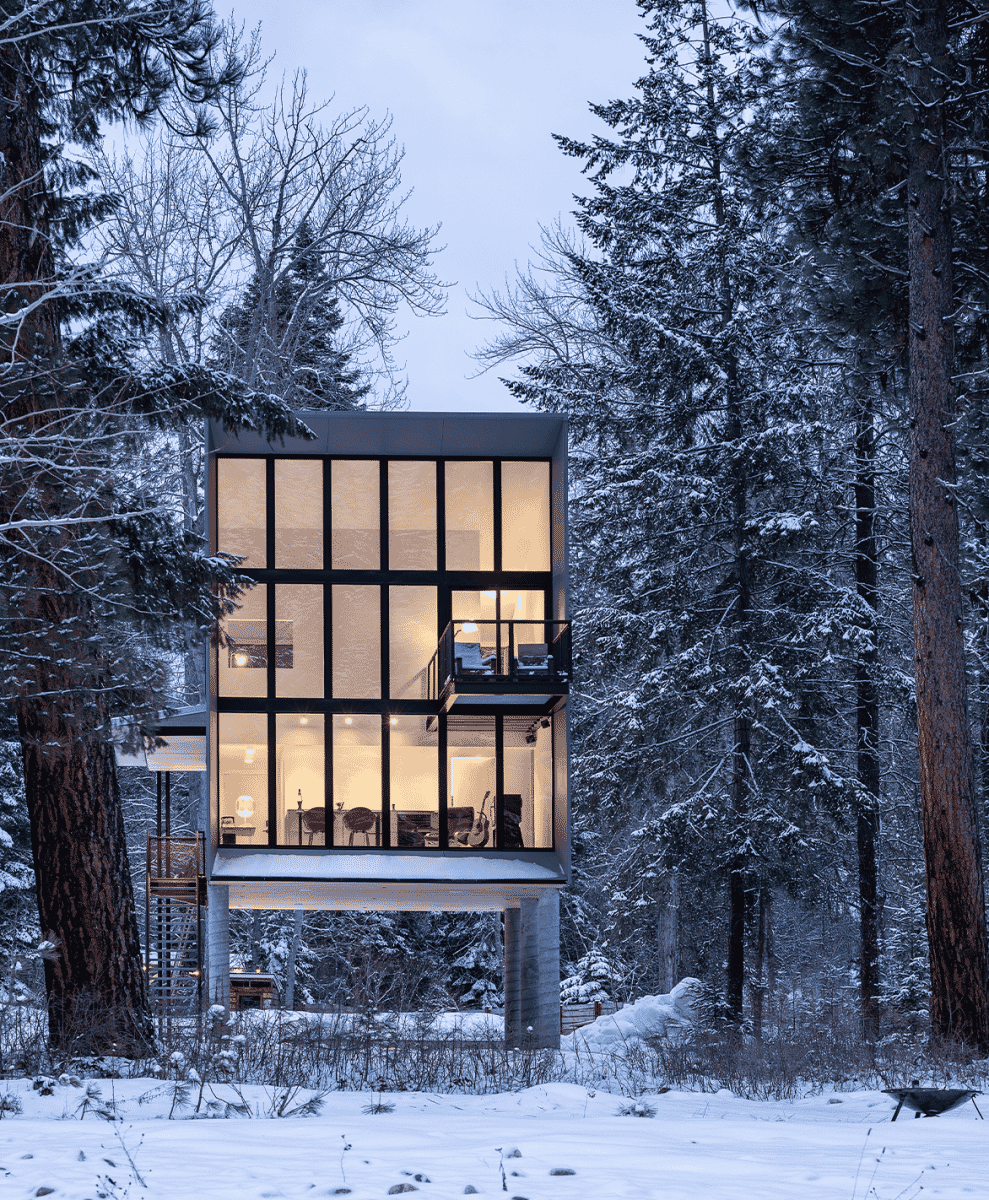
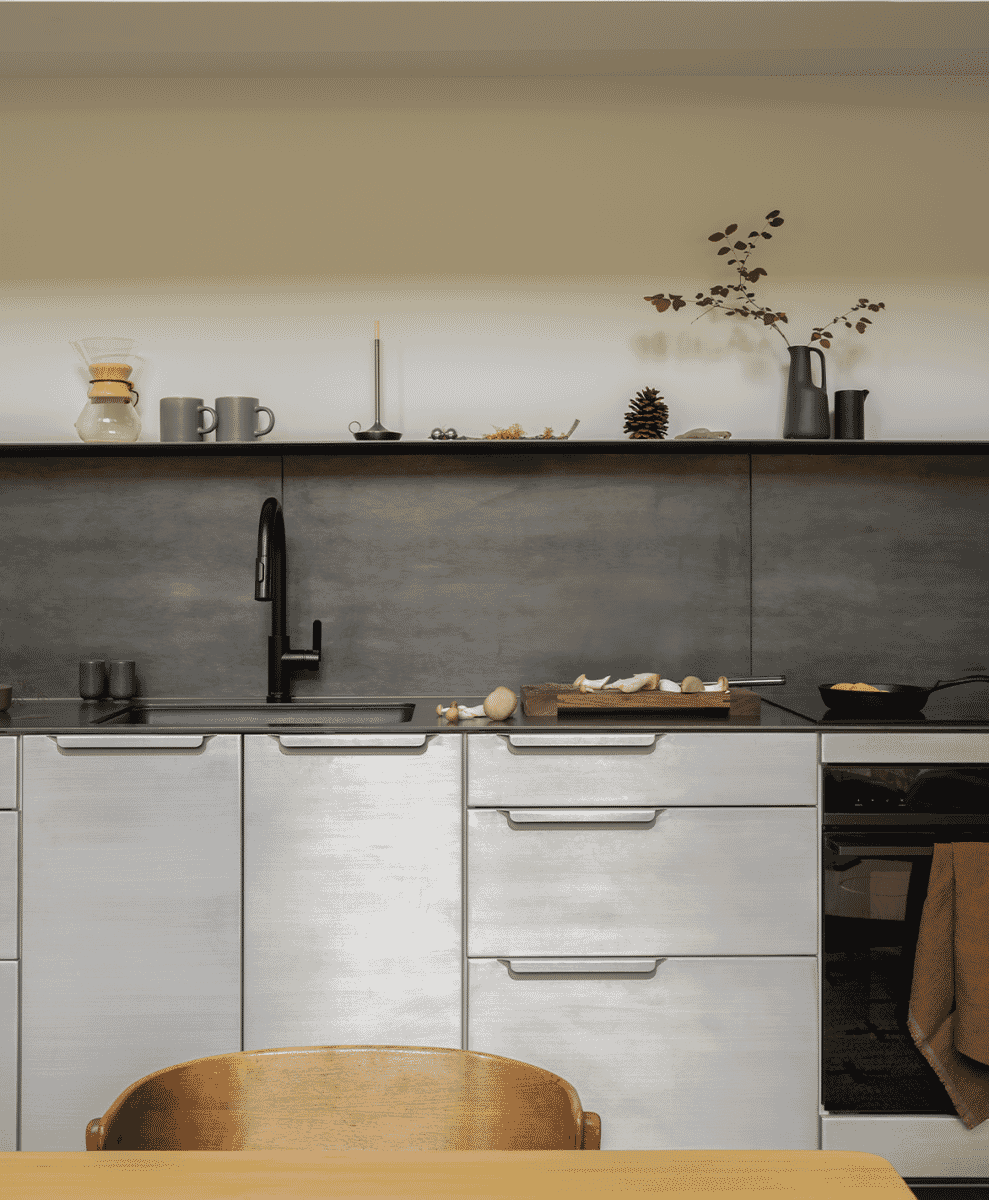
A twenty-foot-wide window wall frames the river while screening neighbouring properties, reinforcing the sense of retreat. Inside, the palette is deliberately minimal. Raw steel kitchen counters, metal mesh guardrails, and a hemlock dining table were all fabricated by the owner, a lifelong metalworker. The effect is calm and unforced. What began as a weekend base camp is now a full-time home, closely attuned to its setting within the Okanogan-Wenatchee National Forest.
Design: Wittman Estes
Photography: Andrew Pogue
Next up: 5 contemporary cabins for your daily dose of escapism.