There are few quicker ways to ruin a good suit than by throwing the wrong coat over it. You've spent time and money getting the fit right, the shoulders sitting neatly and the proportions just so, only to cover the whole thing with a jacket that makes you look like you're wearing a sleeping bag over your work clothes. Not ideal.
The trouble is that not all outerwear plays nicely with tailoring. A coat might look perfectly good on its own, but add a structured blazer underneath and suddenly everything's pulling, bunching and generally behaving badly. Length is another consideration. Unless you're deliberately going for a particular look, having the hem of your suit jacket poking out beneath your outerwear is rarely flattering.
Thankfully, there are plenty of coats that work beautifully over tailoring, from traditional wool overcoats designed specifically for the job to more casual styles that can bring a contemporary edge to suited outfits. Here are the ones worth knowing.
Chesterfield coat
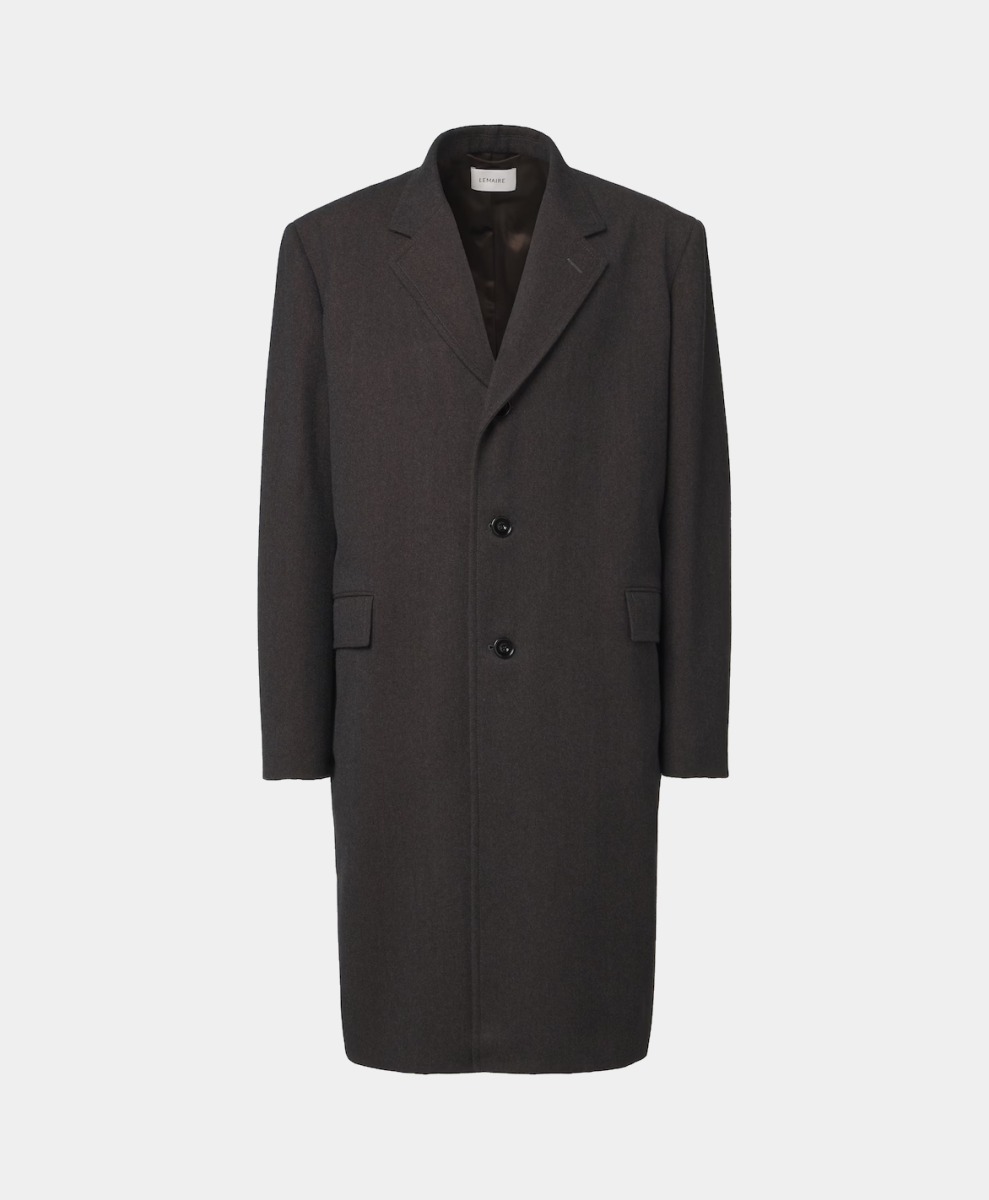
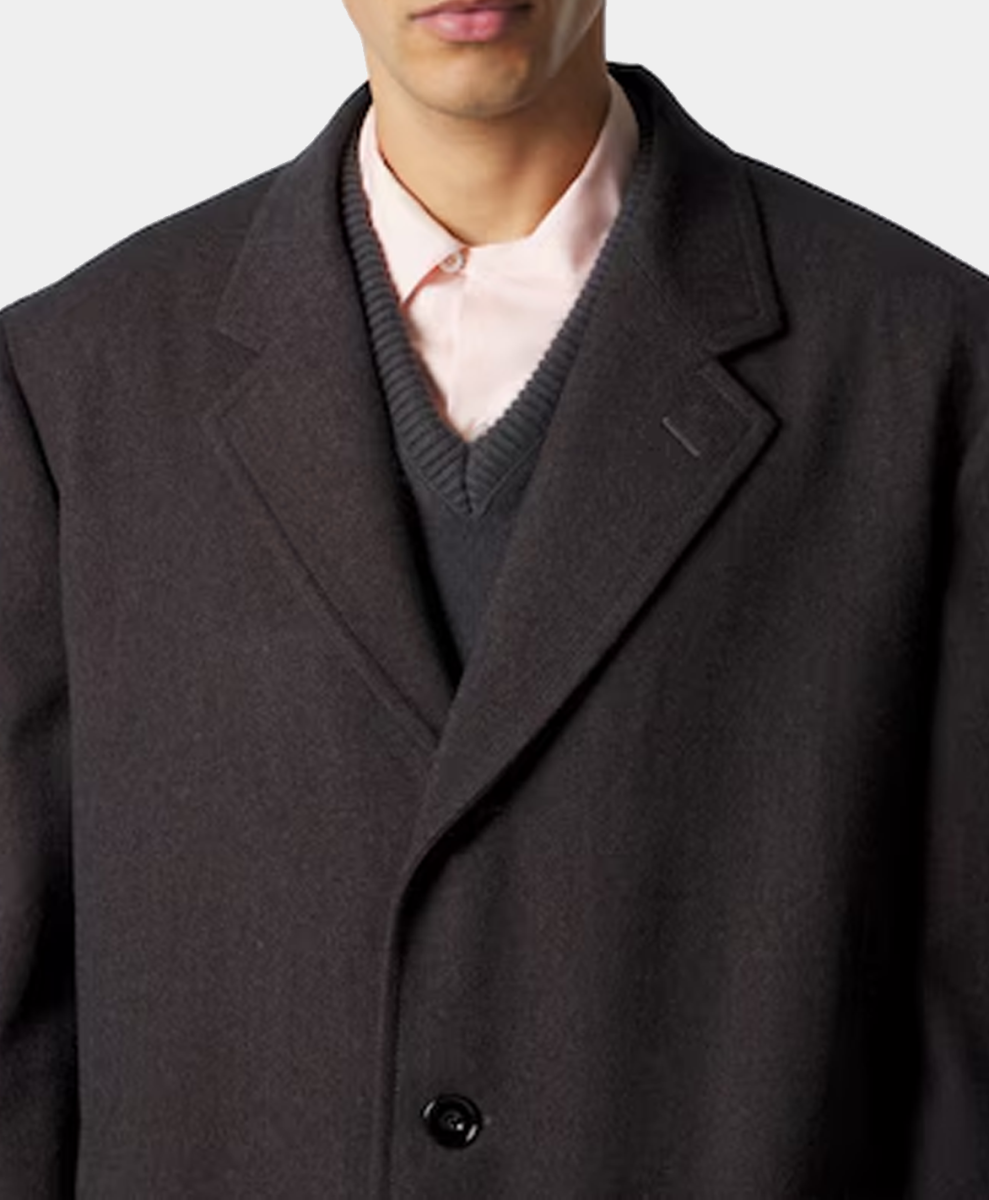
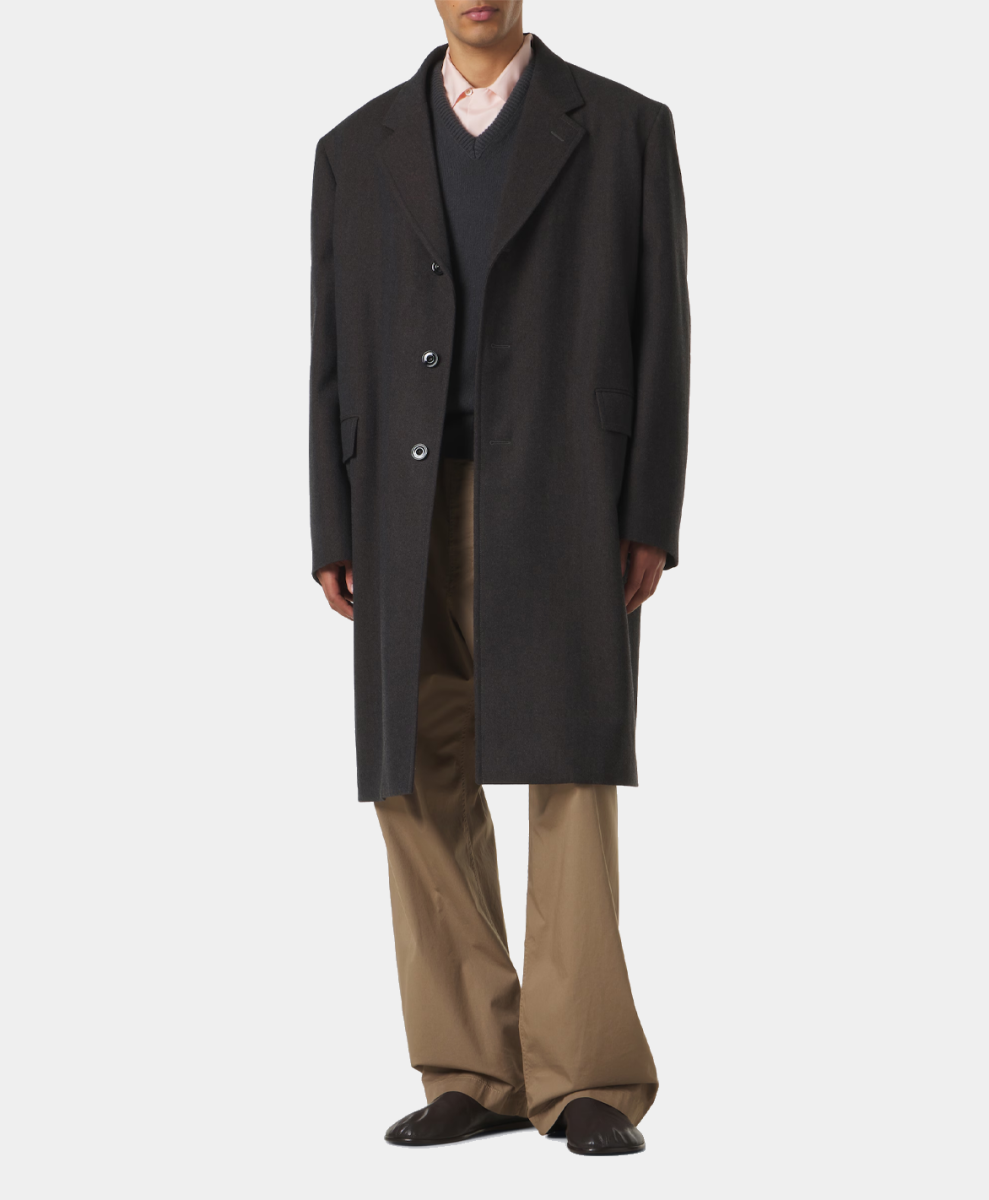
If you're looking for the textbook definition of a coat to wear over a suit, this is probably it. The Chesterfield emerged in the 19th century and helped establish the template for the modern tailored overcoat. It typically features a single-breasted front, notch lapels, a straight silhouette and, in some cases, a contrasting velvet collar.
It's clean, understated and formal enough to accompany even the sharpest business tailoring. Navy, charcoal and black are the safest options, but a camel or tobacco version can look particularly good over a grey suit.
The key is to make sure there's sufficient room through the shoulders and chest. A Chesterfield should complement the structure of the jacket underneath, not squash it into submission.
Trench coat
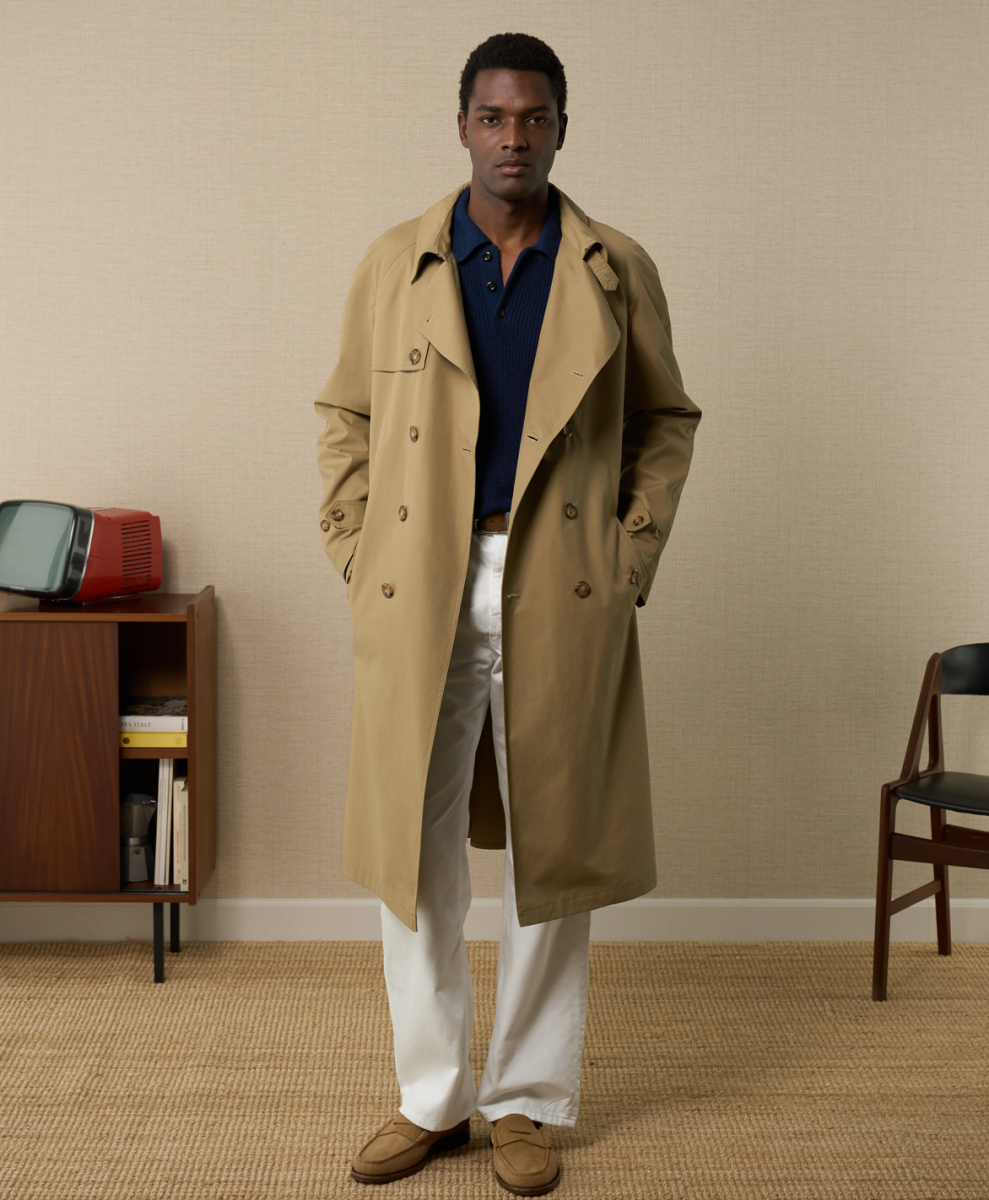
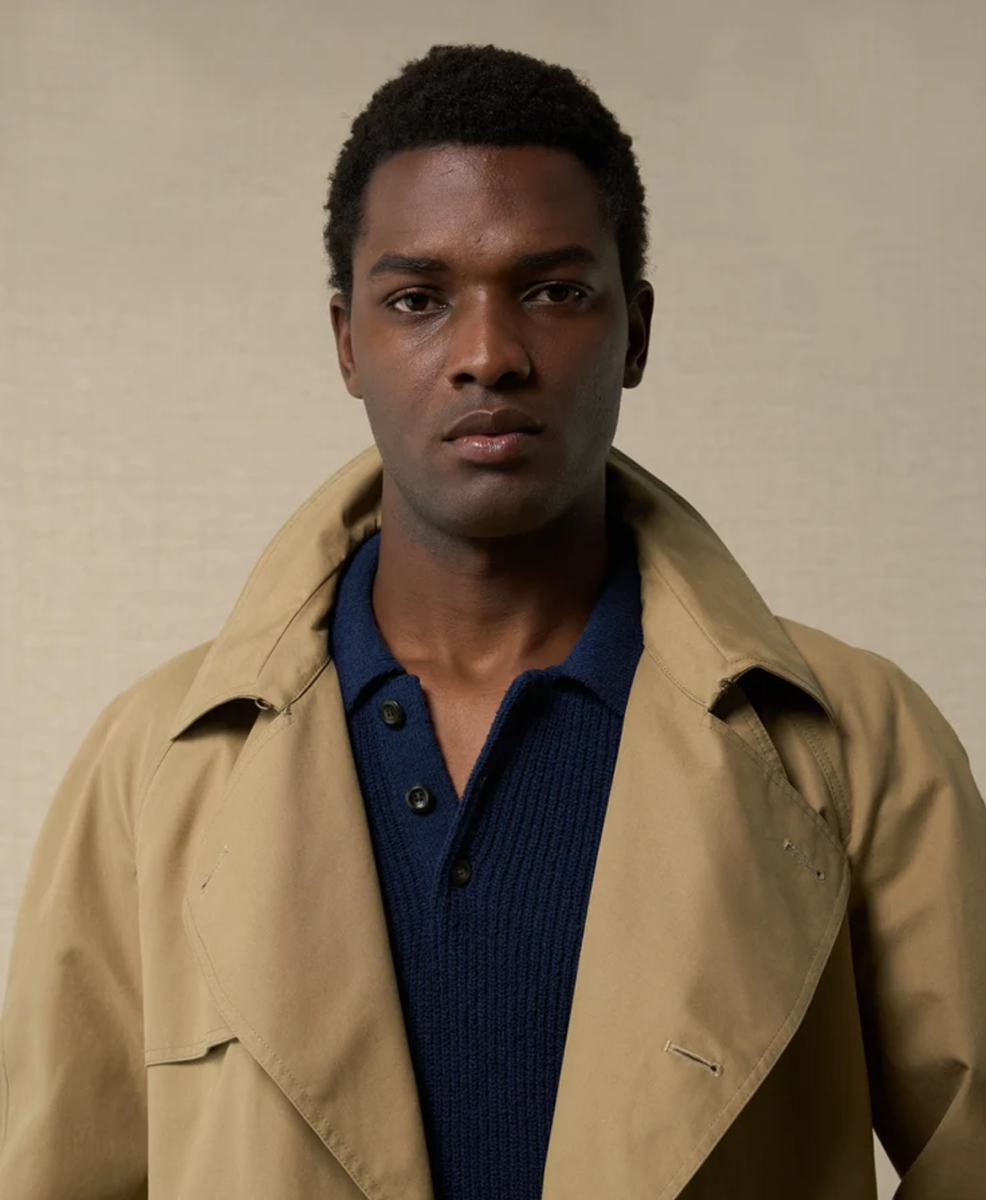
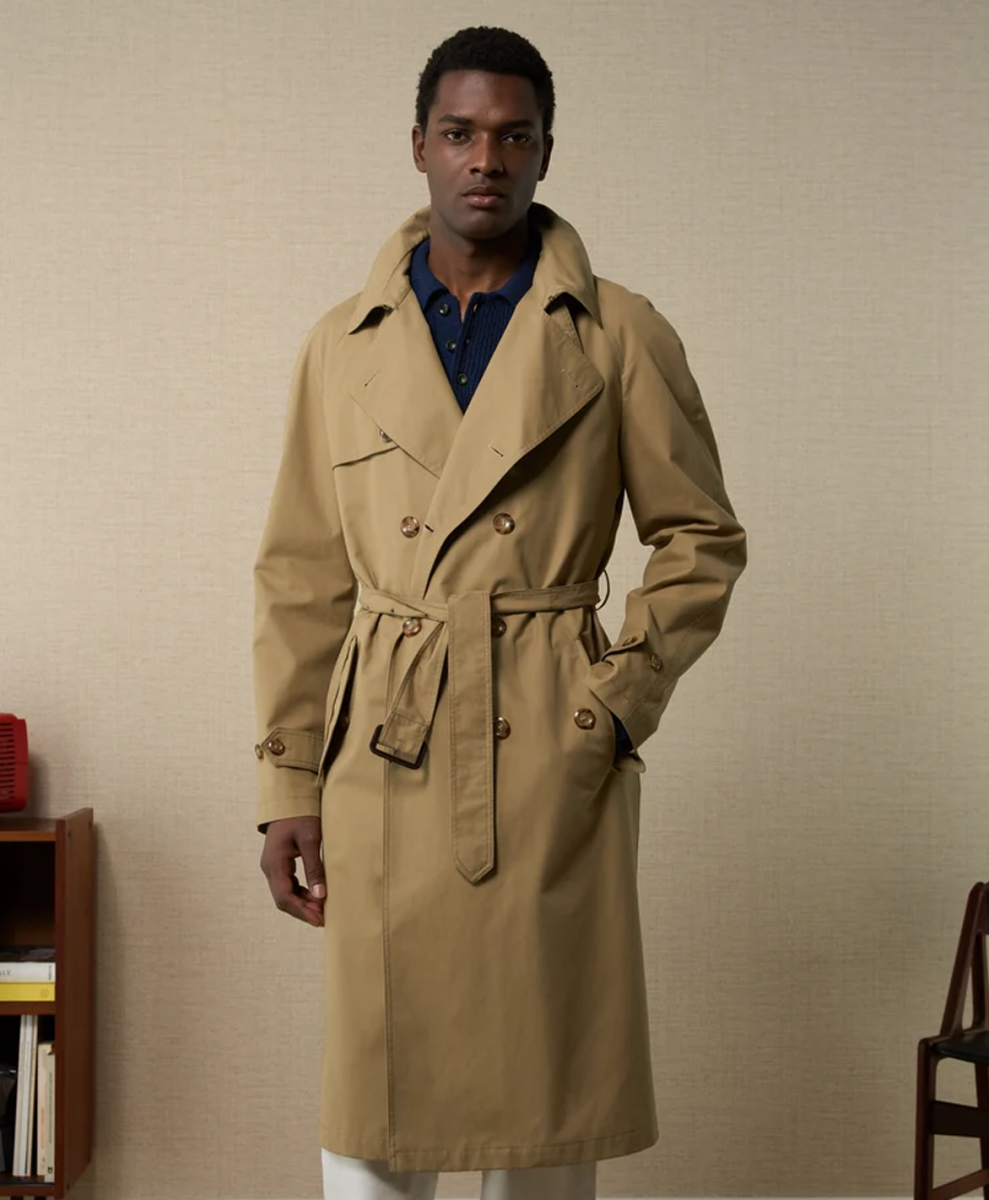
Few garments have made the transition from military uniform to civilian wardrobe quite as successfully as the trench coat. Originally developed for British officers, its double-breasted fastening, storm flaps, belt and weather-resistant gabardine fabric were all born out of practical necessity. Today, those same details make it one of the most recognisable pieces of outerwear in menswear.
A trench is particularly useful for wearing over tailoring during spring and autumn, when a heavy wool overcoat would be excessive. Its relatively generous cut allows room for a jacket underneath, while the belt provides a means of adjusting the silhouette.
Stick to classic beige, stone or navy for maximum versatility. And don't be afraid of a longer length. A trench that finishes below the knee often looks far more elegant over a suit than a cropped version.
Balmacaan coat
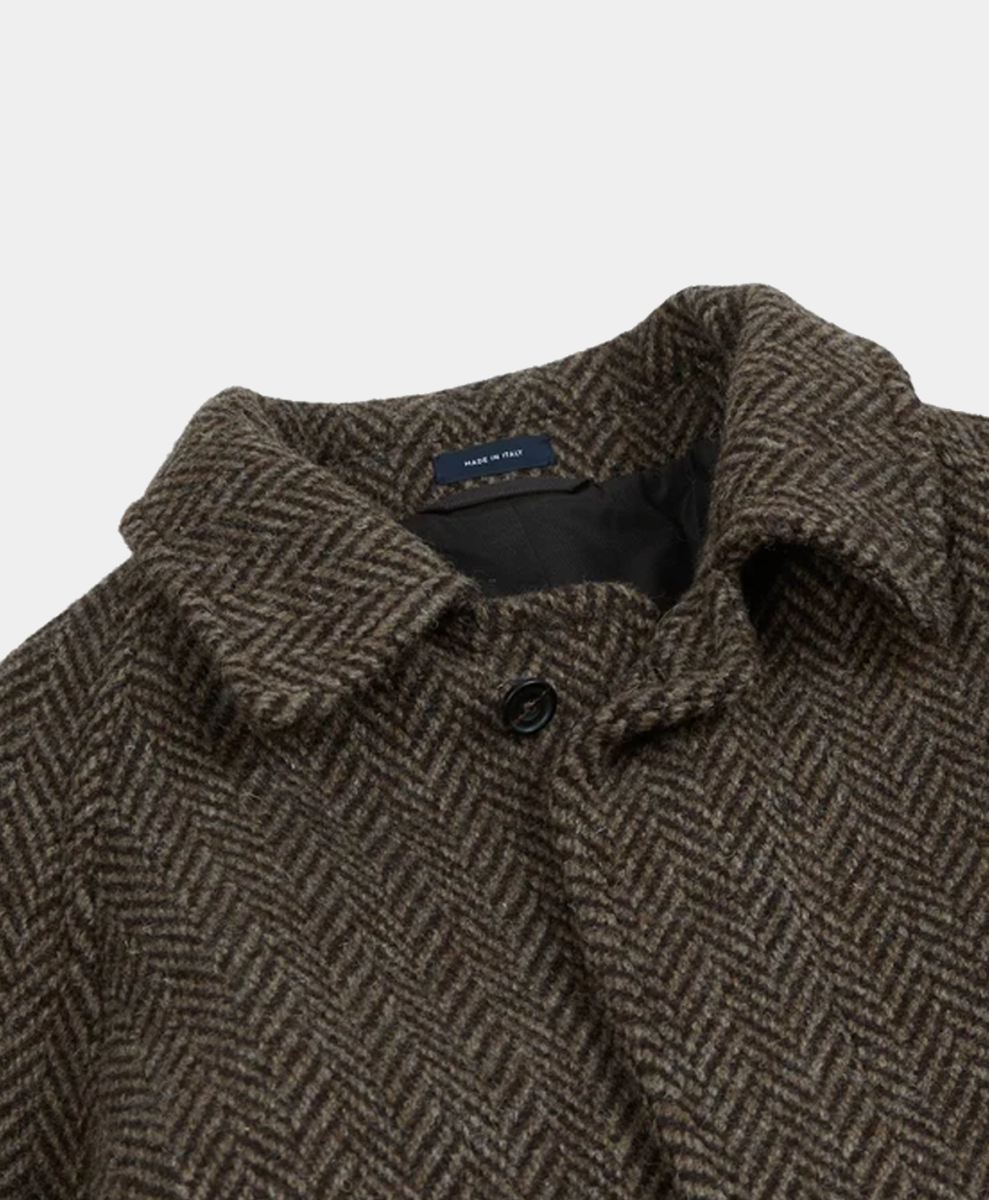
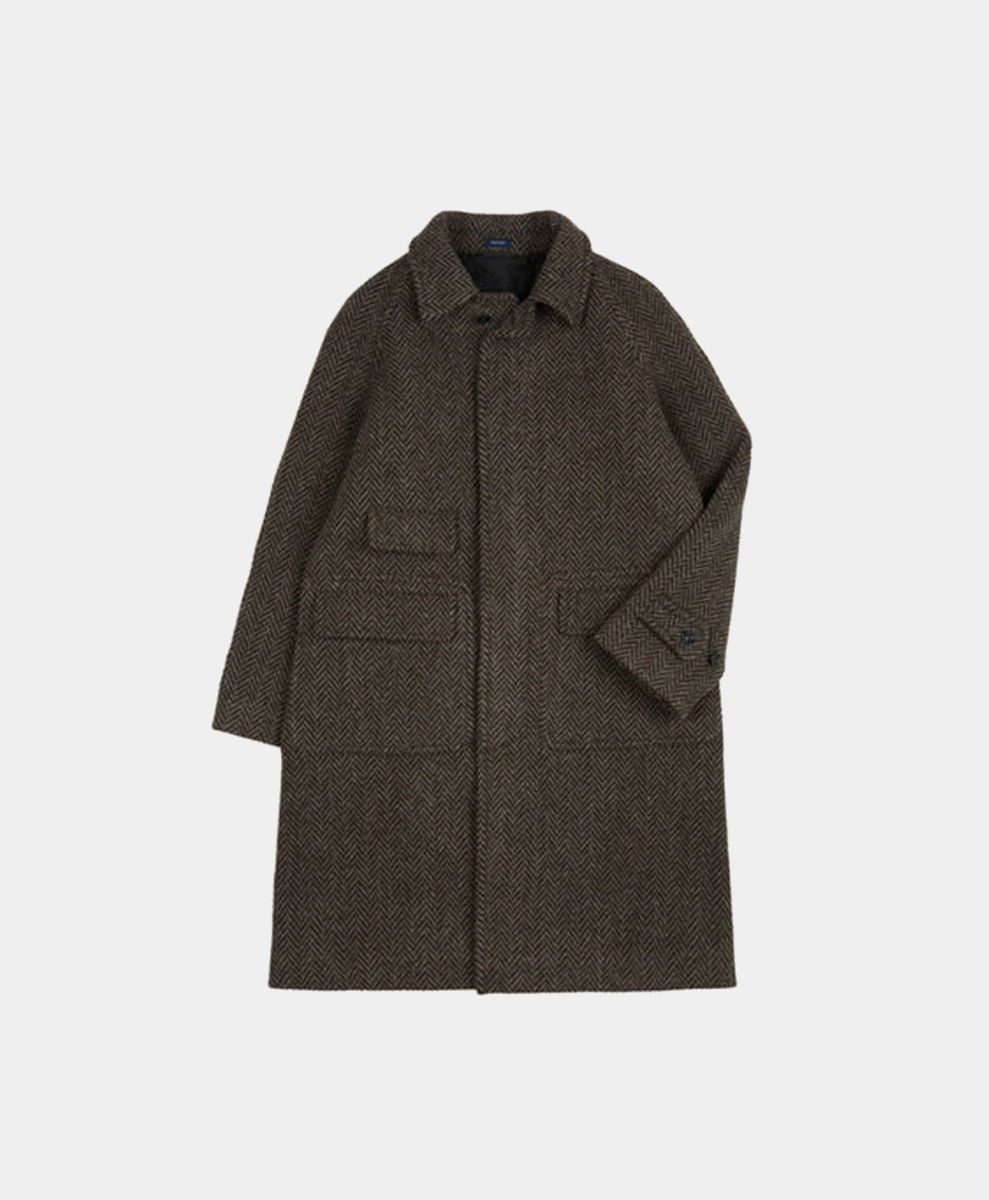
The Balmacaan might be the best coat for wearing over tailoring that you've never given much thought to. Named after an estate in Scotland, this traditional overcoat is characterised by its raglan sleeves, relatively loose silhouette and simple fly-front fastening.
Those raglan sleeves are particularly important. Unlike a coat with conventional set-in shoulders, a Balmacaan doesn't impose a rigid shoulder line over the jacket beneath it. This makes it exceptionally comfortable to wear over tailoring, especially softer, less structured suits.
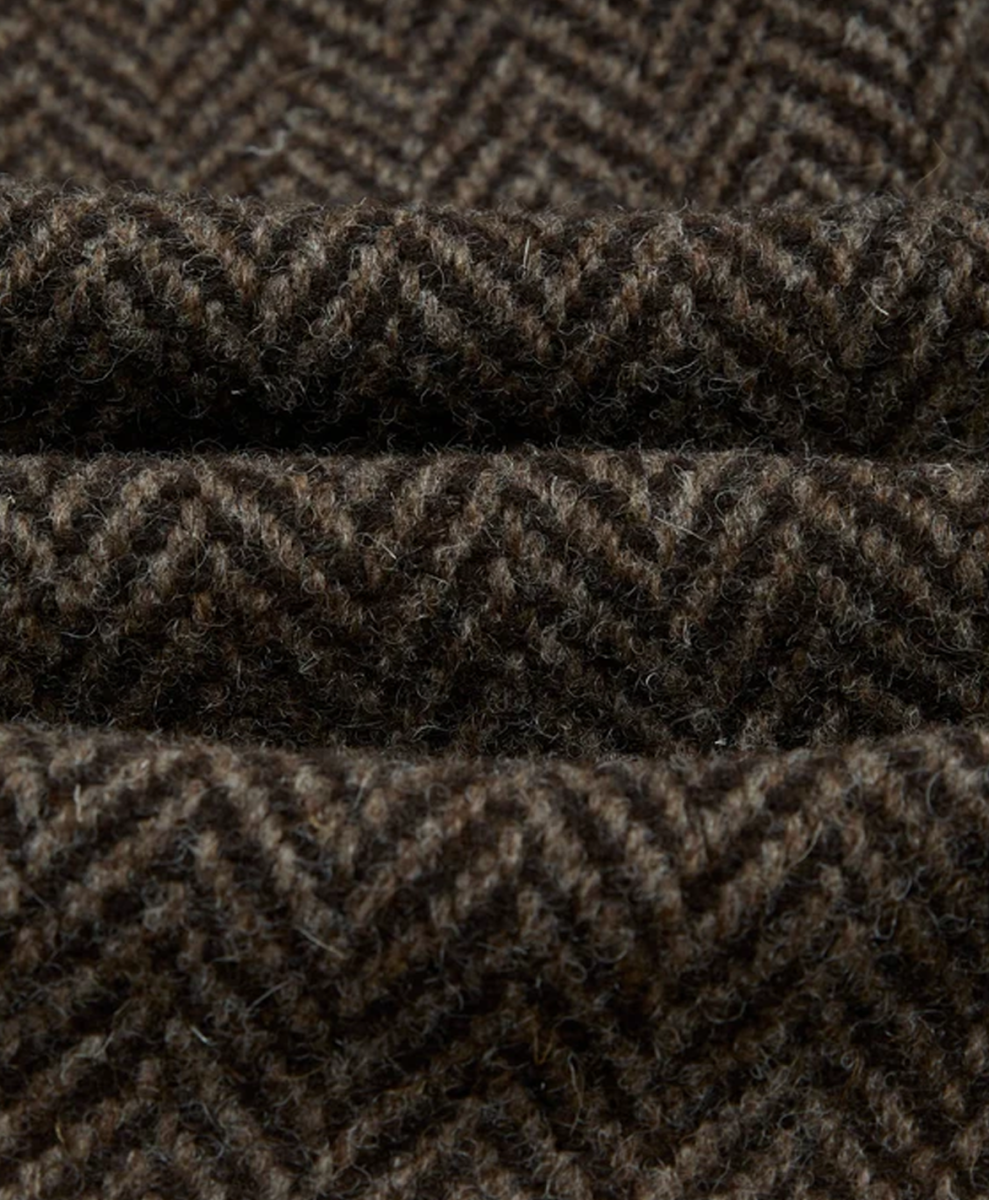
It's also a little more relaxed than a Chesterfield, making it an excellent option for anyone whose wardrobe sits somewhere between formal and casual. Try a navy or charcoal wool version with business tailoring, or a checked or herringbone style with flannel trousers and an unstructured blazer.
Field jacket
Not every coat worn over tailoring needs to look as though it belongs in a boardroom. In fact, one of the most interesting developments in modern menswear has been the increasing willingness to mix traditionally formal clothes with pieces borrowed from military and workwear wardrobes.
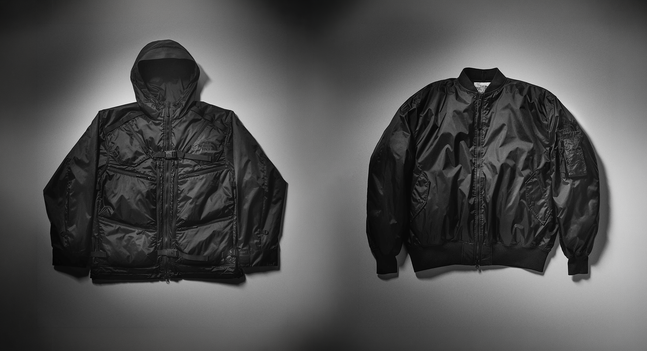
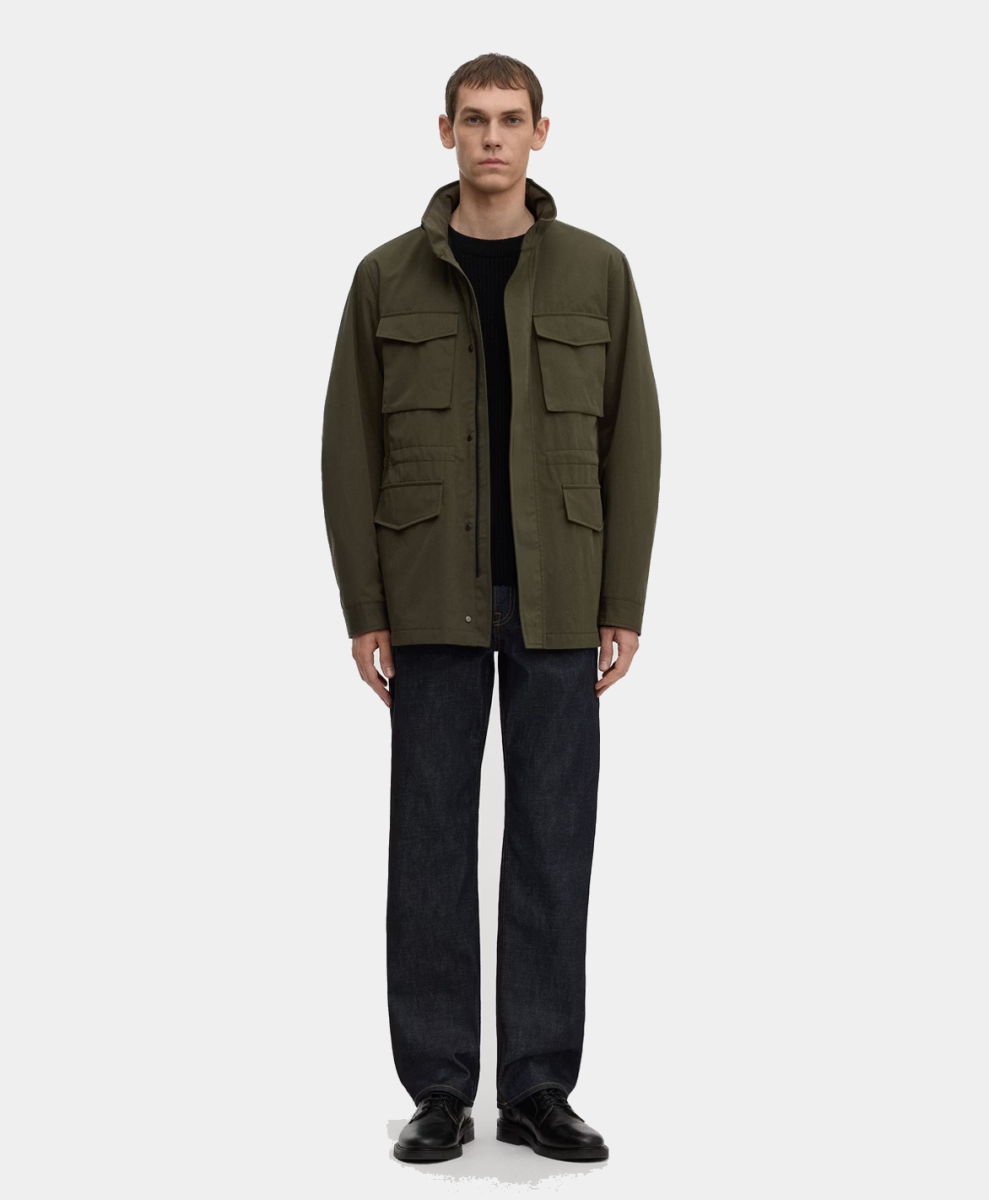
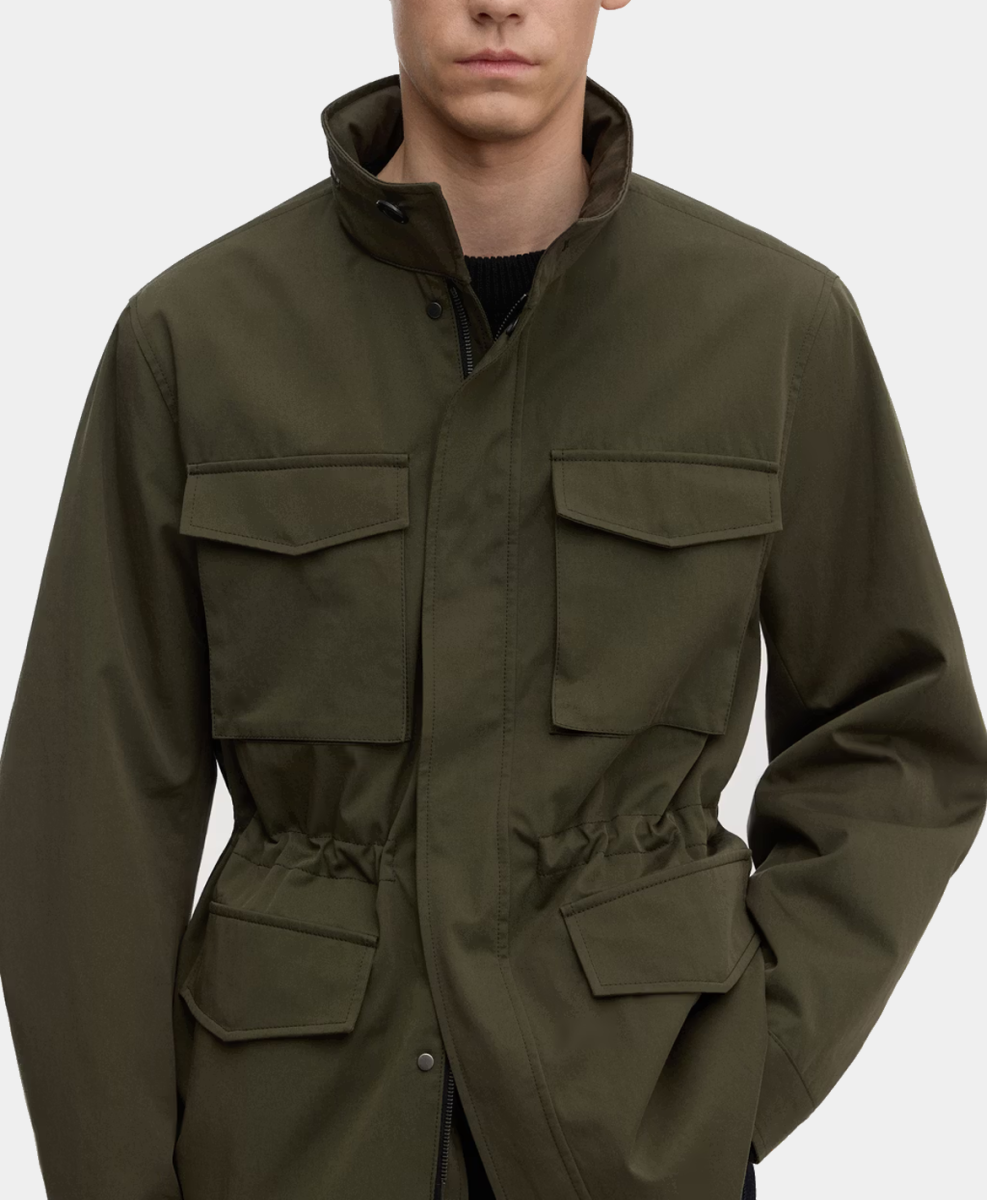
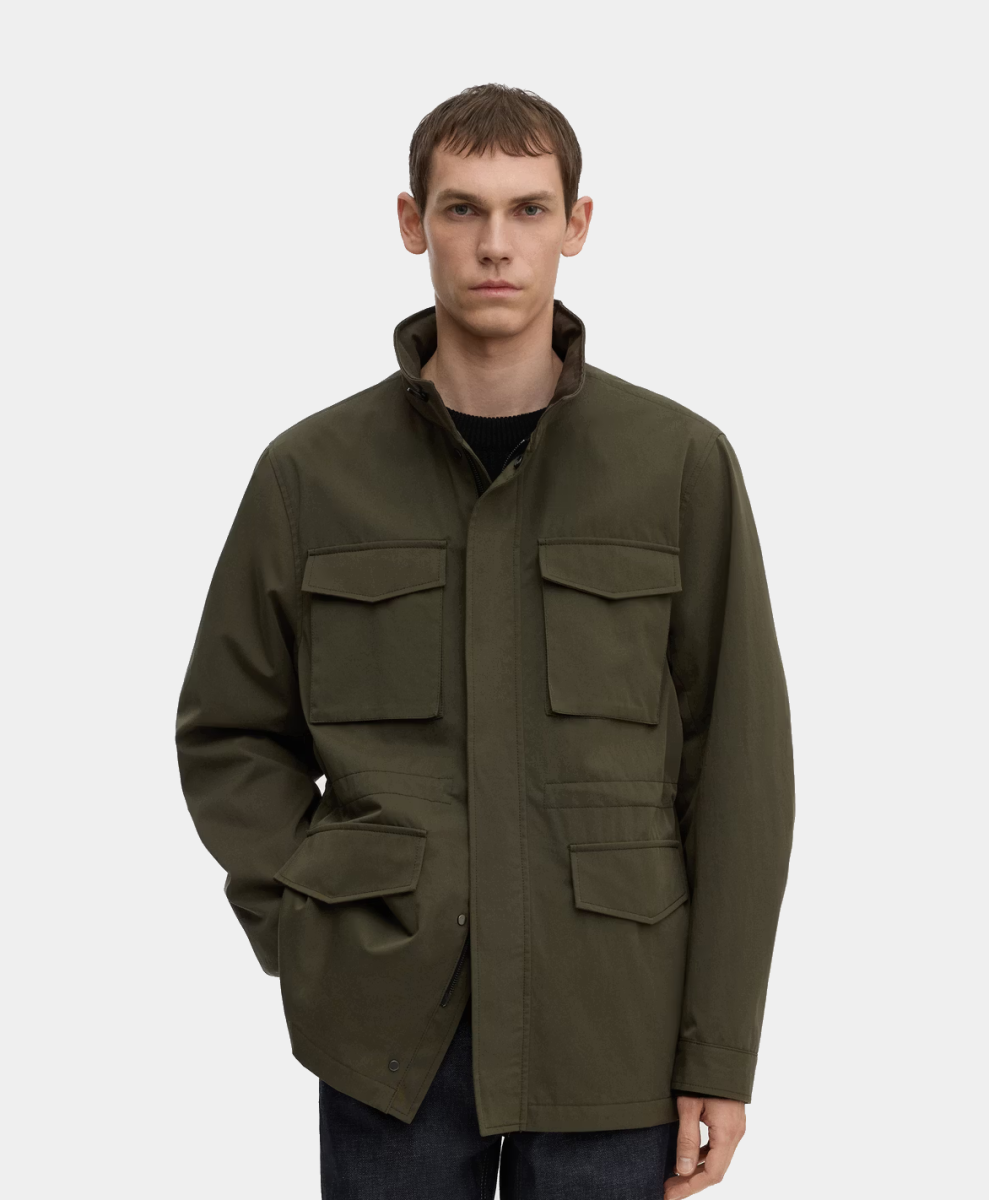
The field jacket is a perfect example. Originally designed for military use, styles such as the M-65 feature multiple pockets, a relaxed cut and practical details that contrast nicely with the clean lines of a tailored jacket.
This works best with casual tailoring rather than formal business suits. Think an olive field jacket over a navy unstructured blazer, grey flannel trousers and suede loafers. The sort of outfit that looks as though it belongs on an elderly Italian gentleman who has never once worried about a dress code.
Fit is crucial. The field jacket needs to be roomy enough to accommodate the blazer and ideally long enough to cover its hem. Avoid overly fitted versions, which tend to make the whole arrangement look cramped.

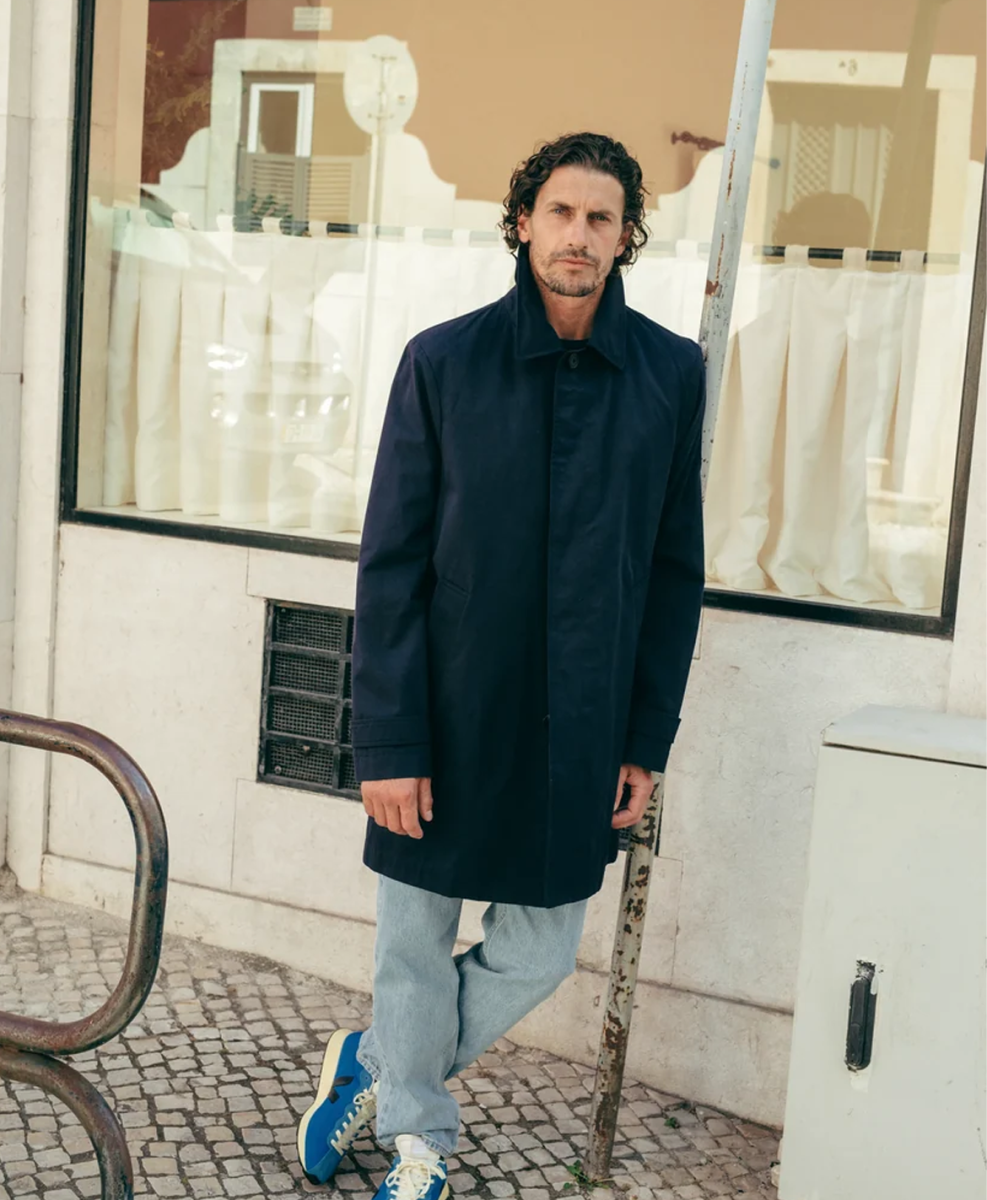
Mac
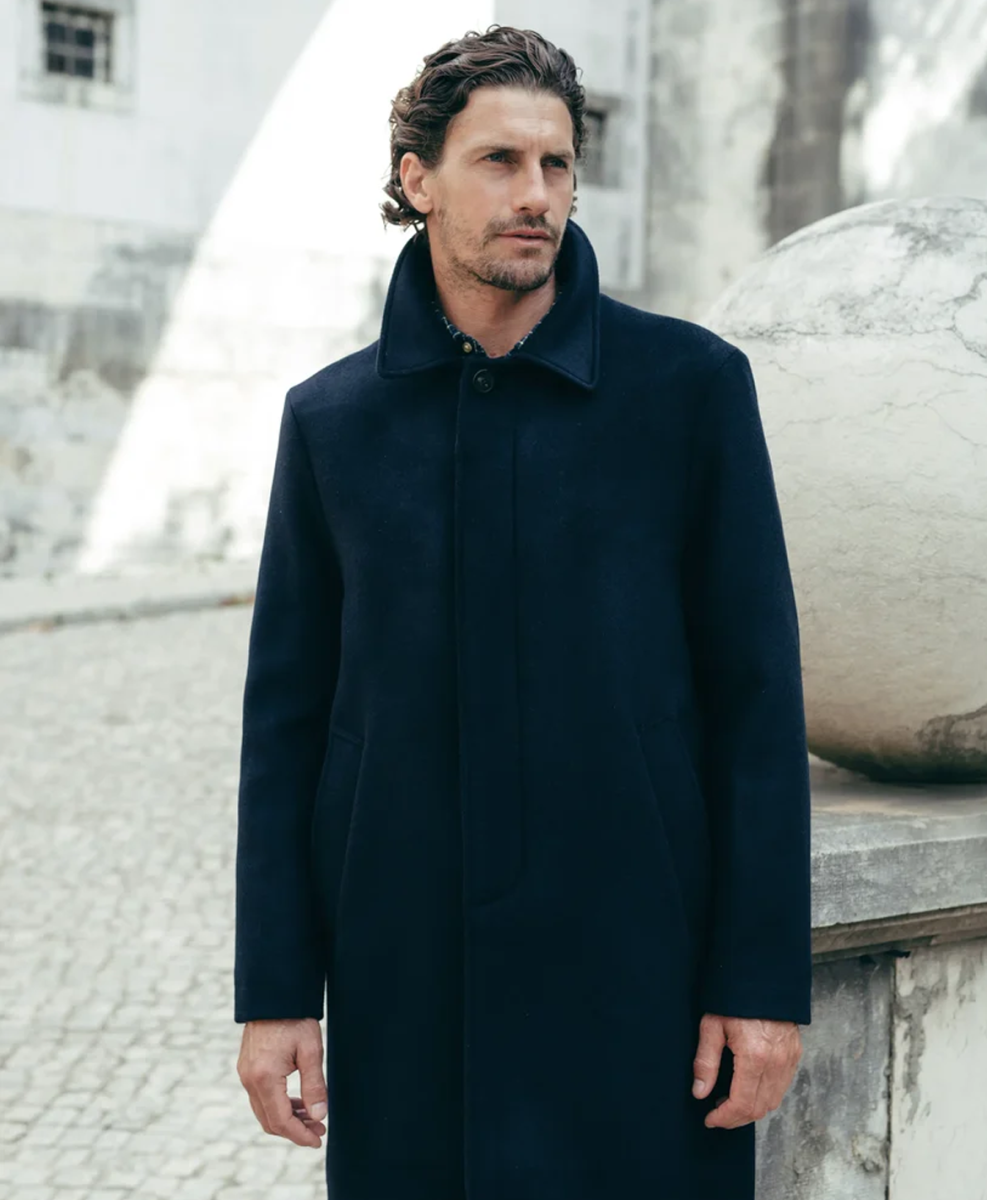
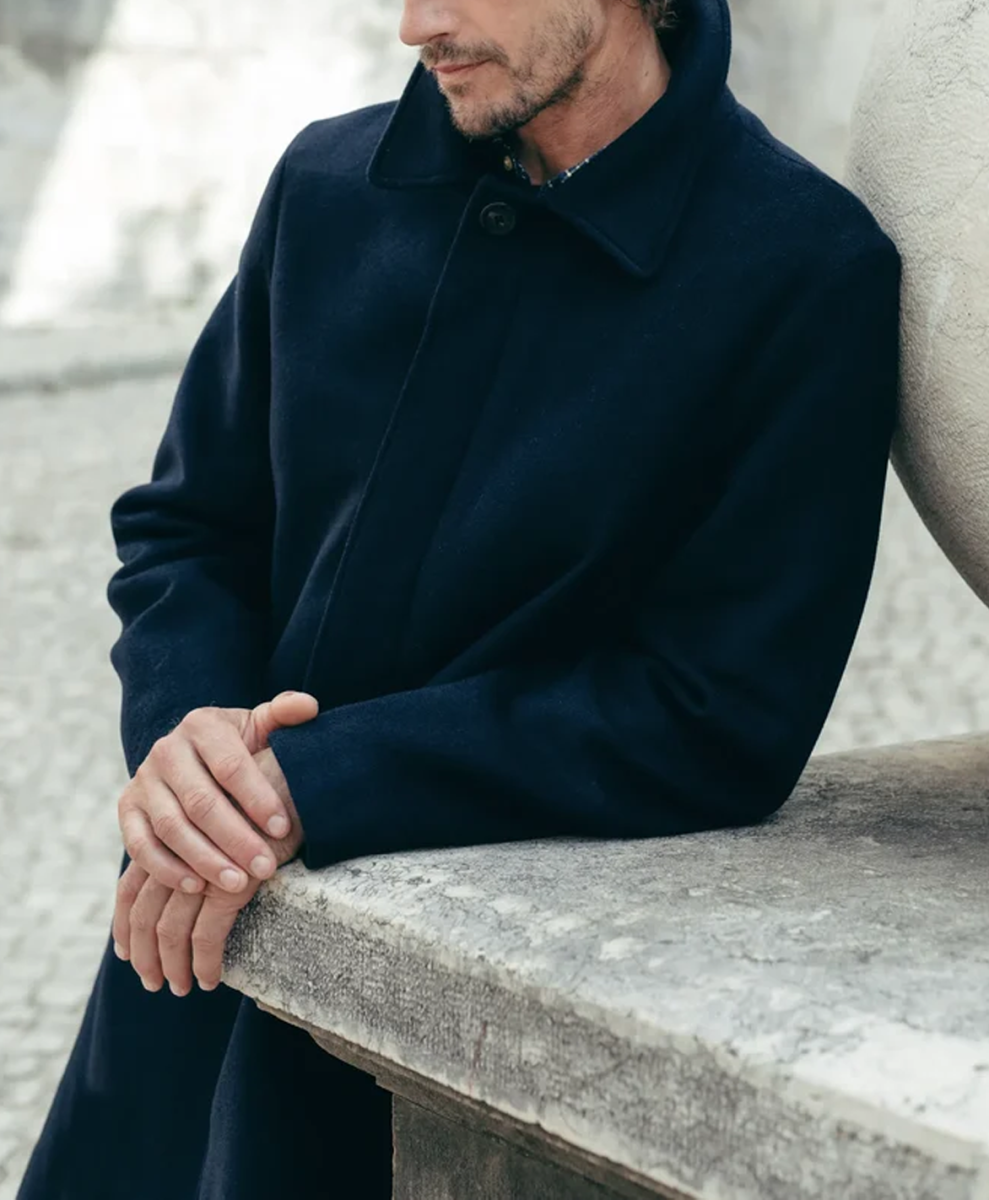
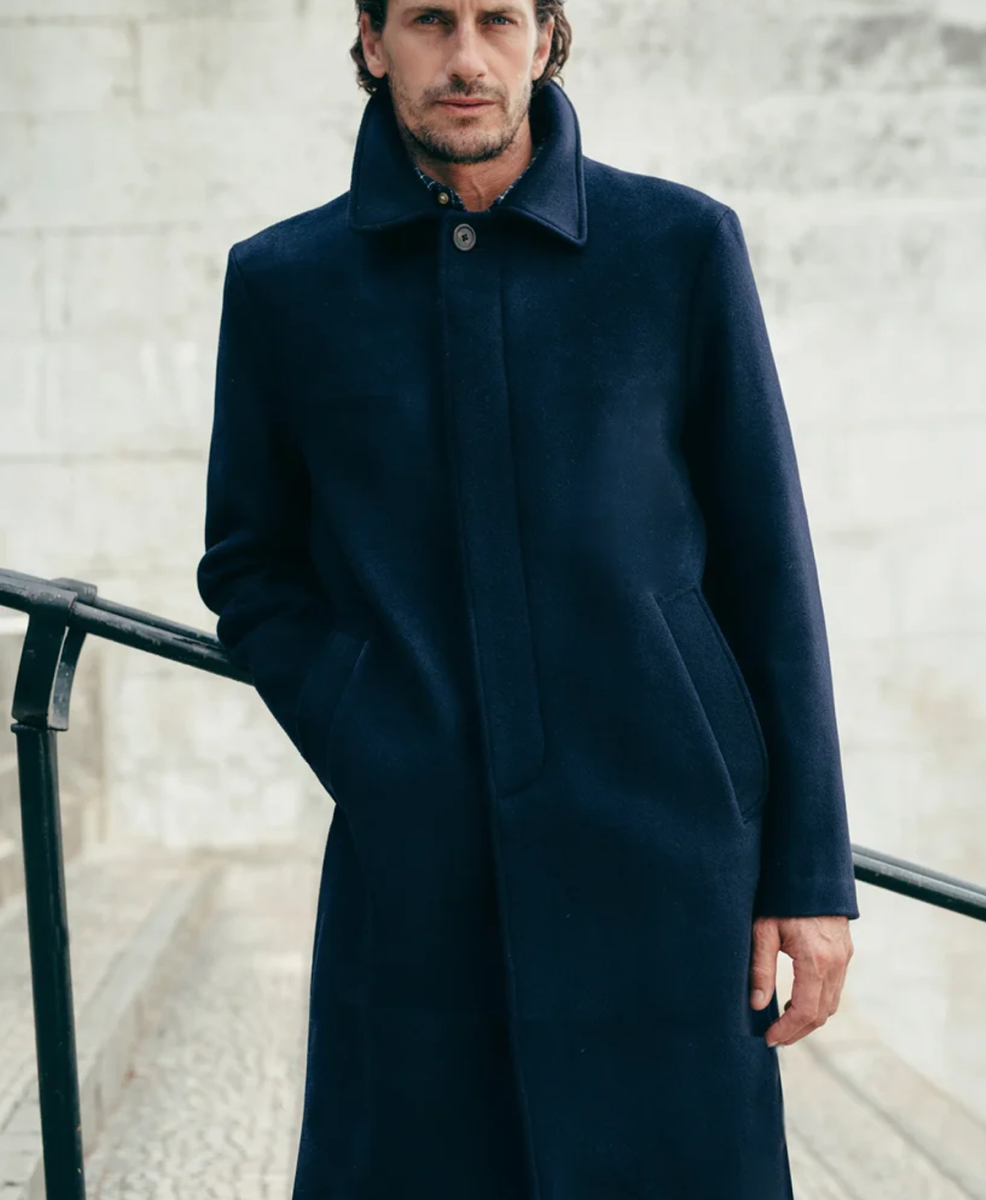
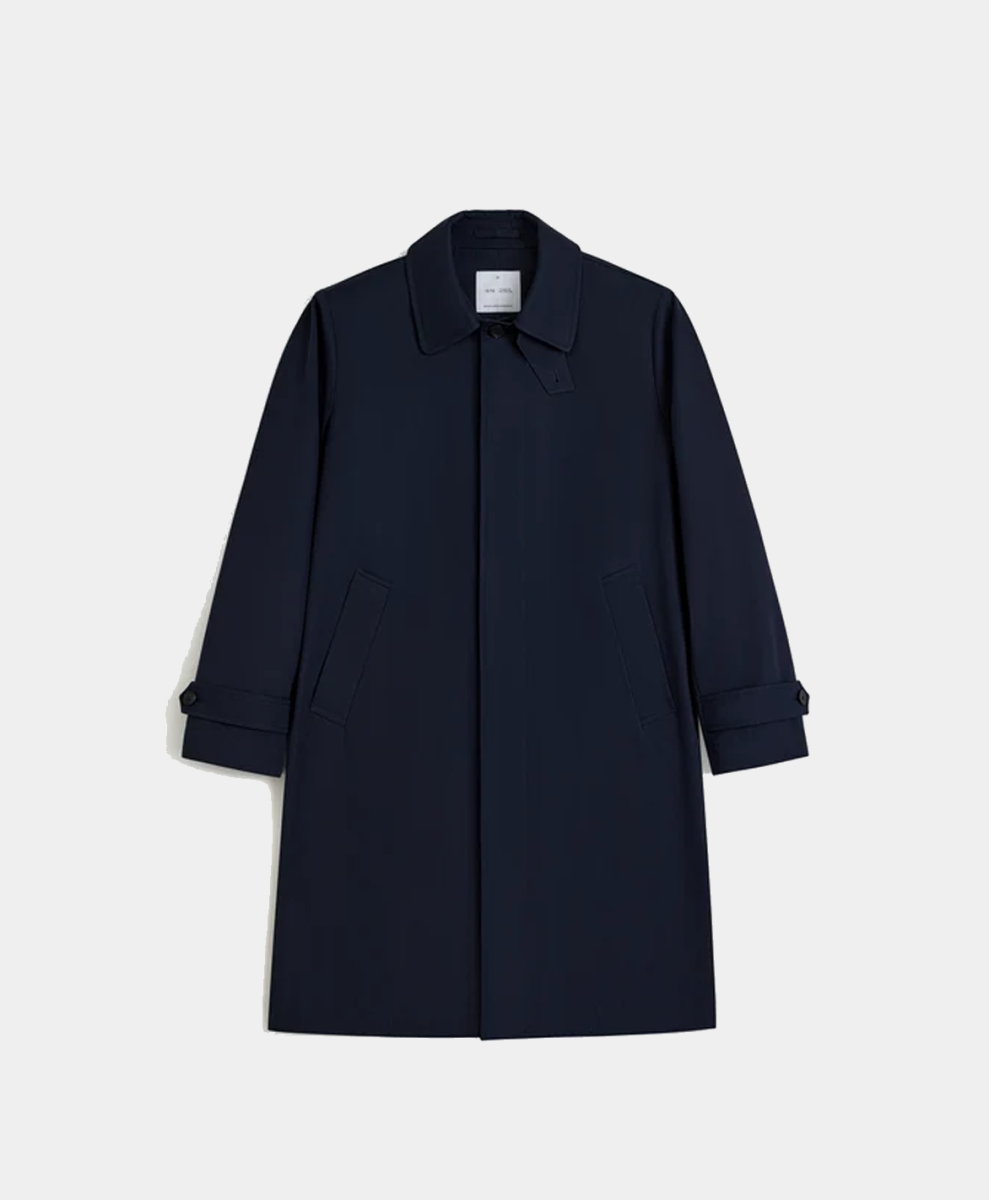
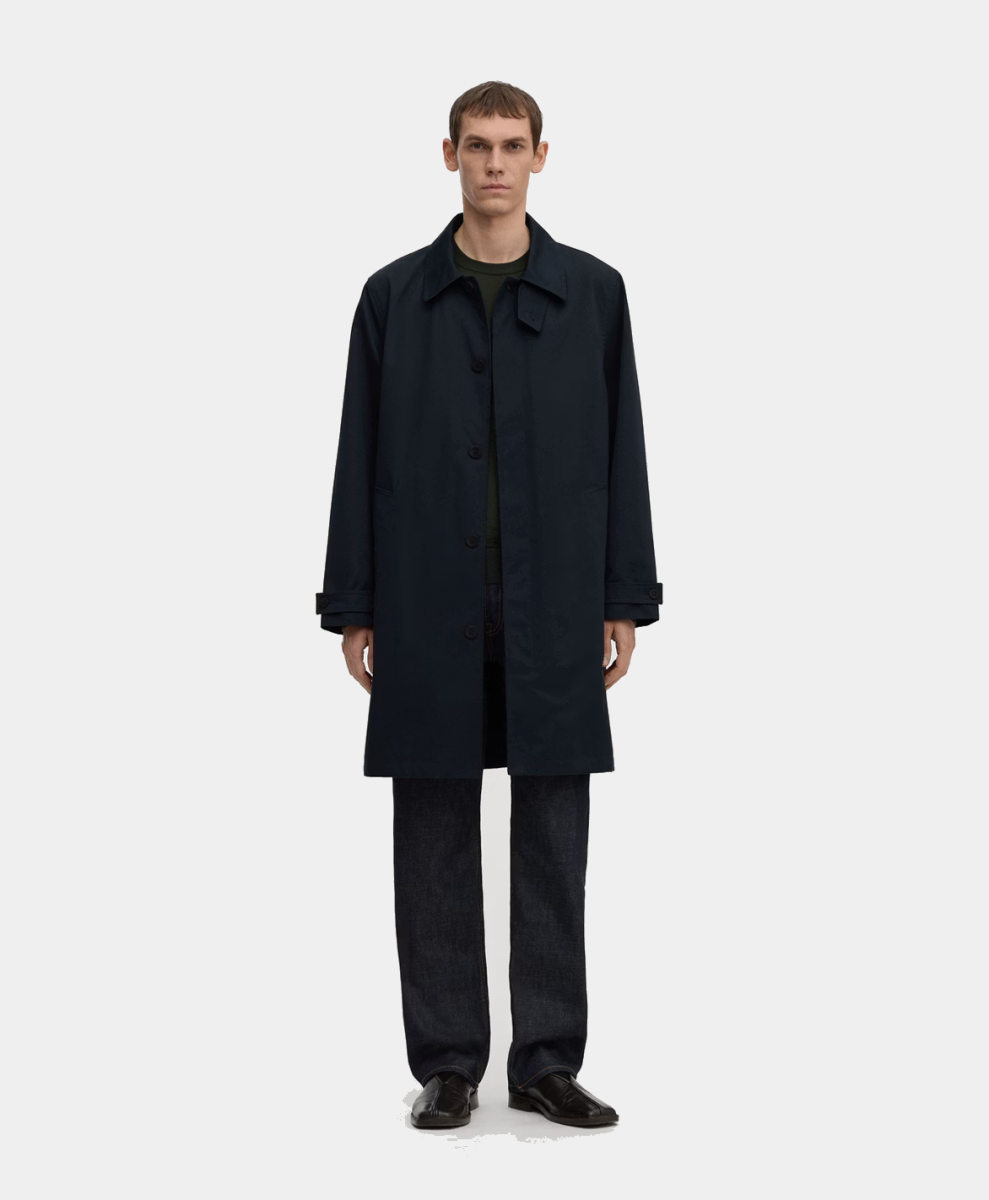
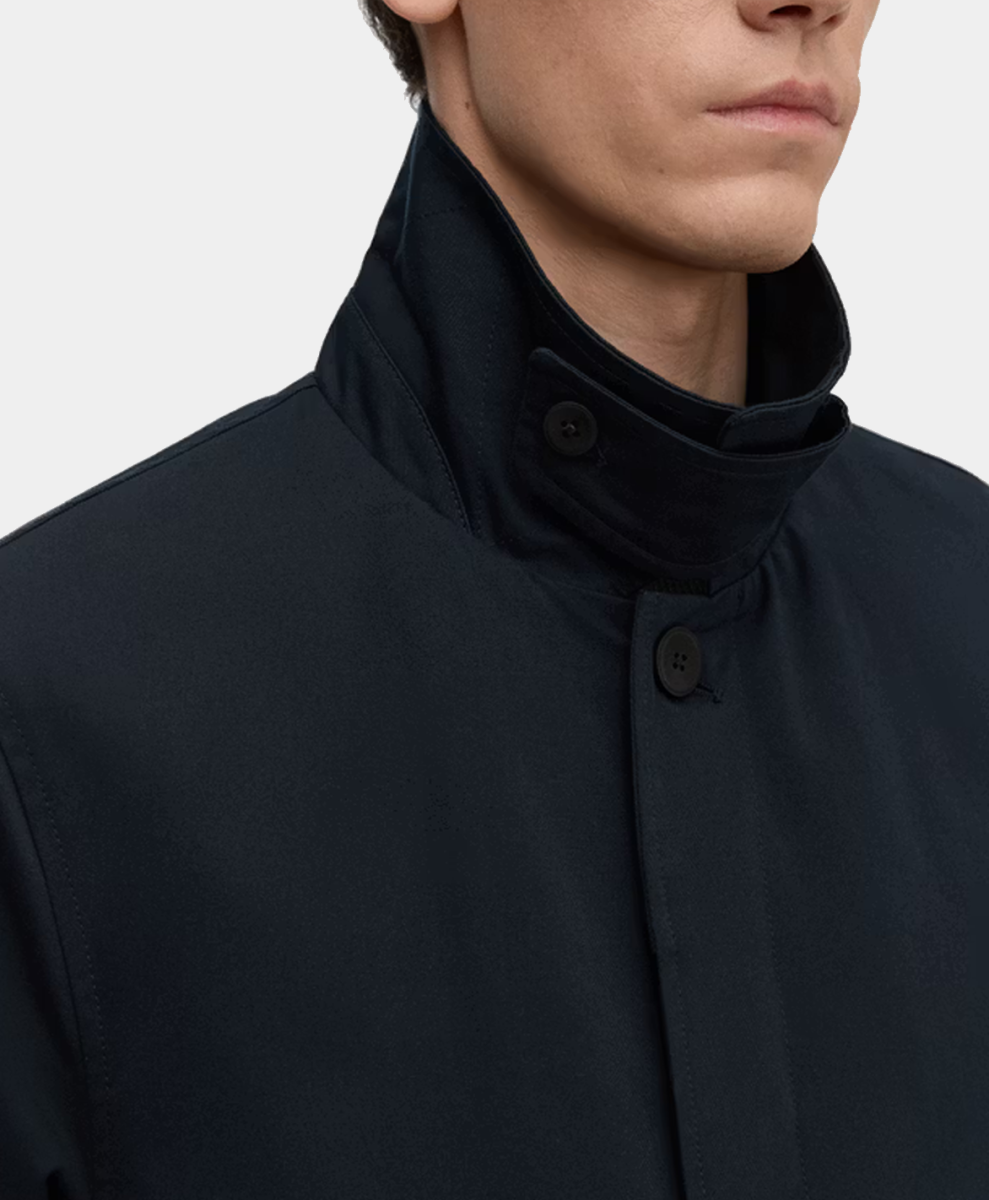
For anyone who wants a coat that works over tailoring without attracting much attention, the mac is difficult to beat. Essentially a stripped-back raincoat, it typically features a single-breasted front, concealed fastening, simple collar and minimal detailing.
The design has its roots in the waterproof outerwear pioneered by Charles Macintosh in the 19th century, although modern interpretations range from traditional rubberised cotton to lightweight technical fabrics.
What makes a mac so useful is its simplicity. Unlike a trench coat, there's no belt, epaulettes or elaborate hardware competing with the tailoring underneath. It simply provides a clean outer layer that works with almost anything.
Navy and stone are particularly versatile, while olive offers a slightly more casual alternative. Look for a length that covers your suit jacket and a cut that allows the fabric to fall naturally rather than pulling across the chest.
Tweed overcoat
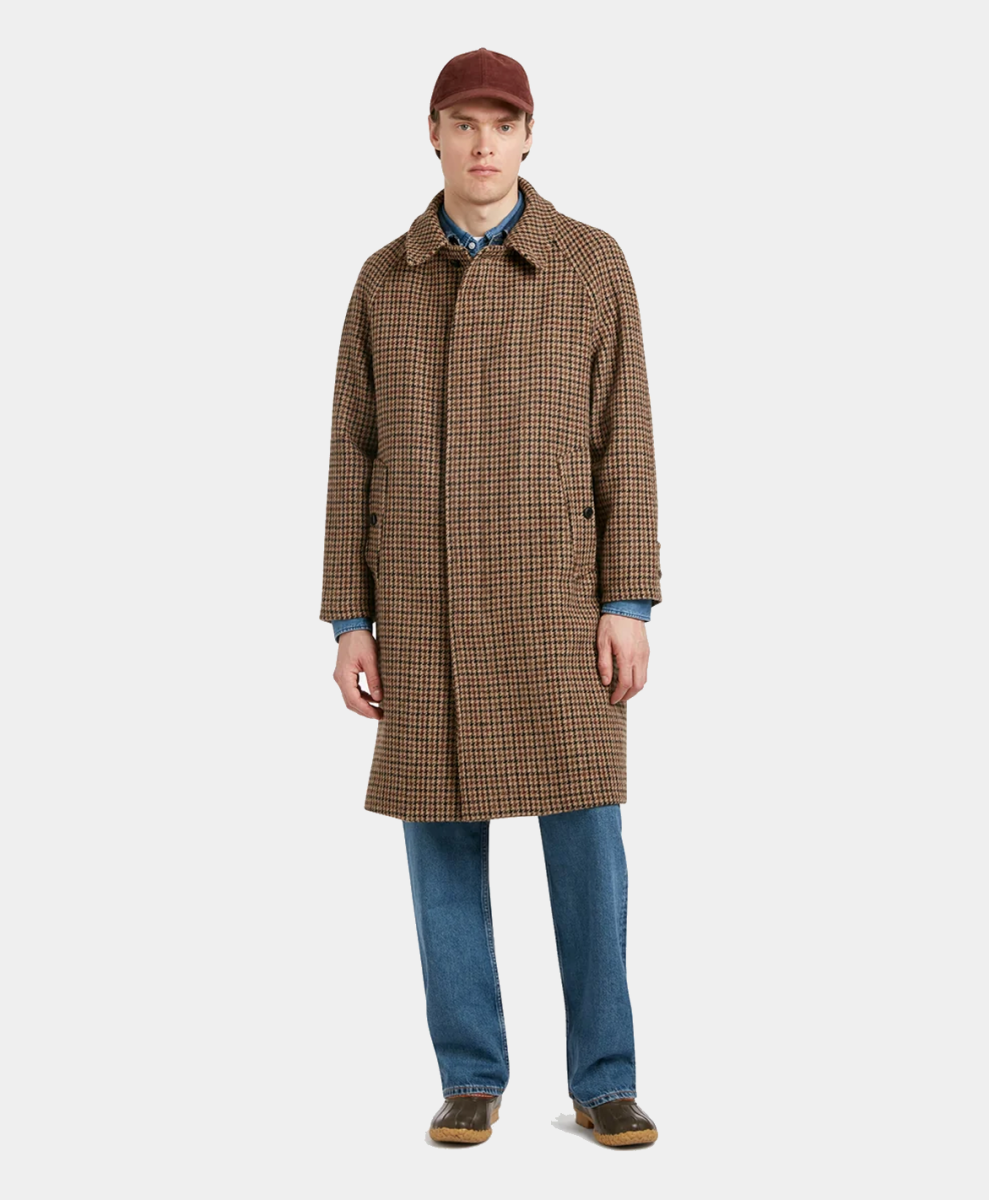
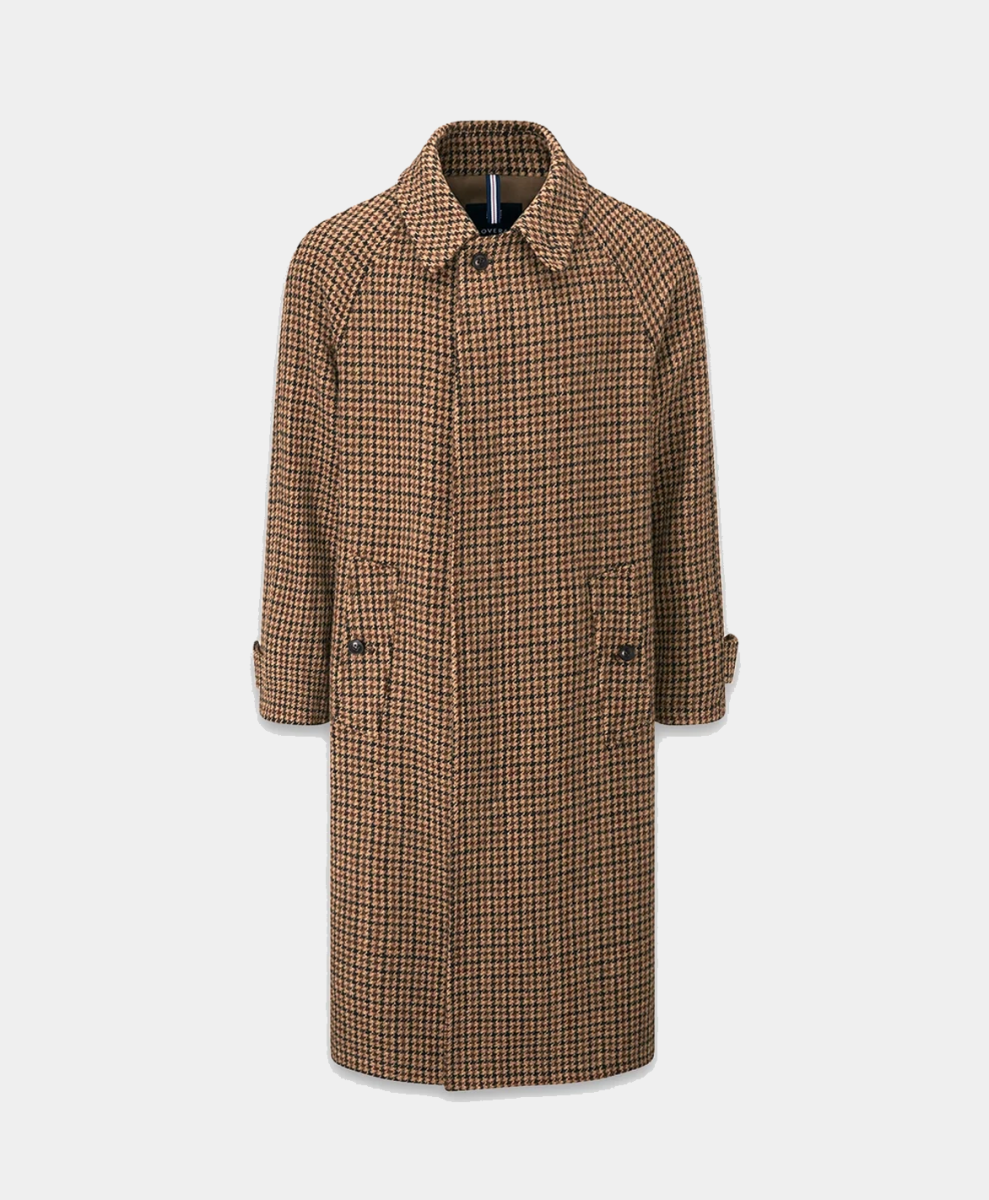
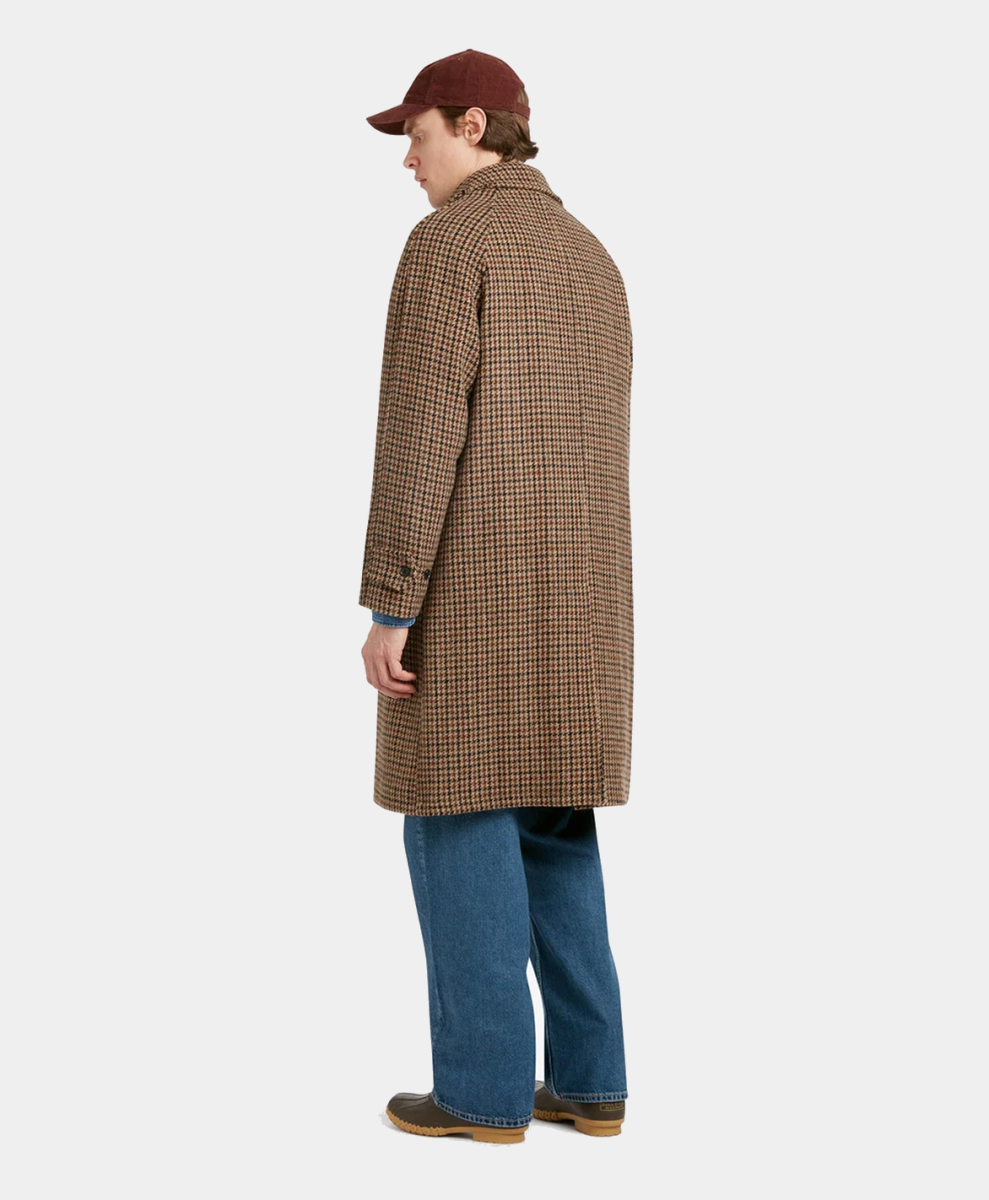
Tailoring doesn't have to mean smooth worsted wool and razor-sharp creases. Some of the most interesting suited outfits are built around texture, and a tweed overcoat is an excellent way to introduce more of it.
Tweed has long been associated with British country clothing, but its use in overcoats makes it equally relevant to urban wardrobes. Herringbone, Donegal and subtle checks all offer something more visually interesting than plain wool, without necessarily making the coat difficult to wear.
The trick is knowing how to balance textures and patterns. A herringbone overcoat over a plain navy suit is a straightforward combination, while a flecked Donegal coat can bring some depth to charcoal flannel tailoring.
You can certainly combine patterned tailoring with a patterned coat, but it's worth varying the scale of the designs so they don't compete. And remember that tweed tends to be relatively substantial, so consider the weight of the suit underneath before adding more layers.
Car coat
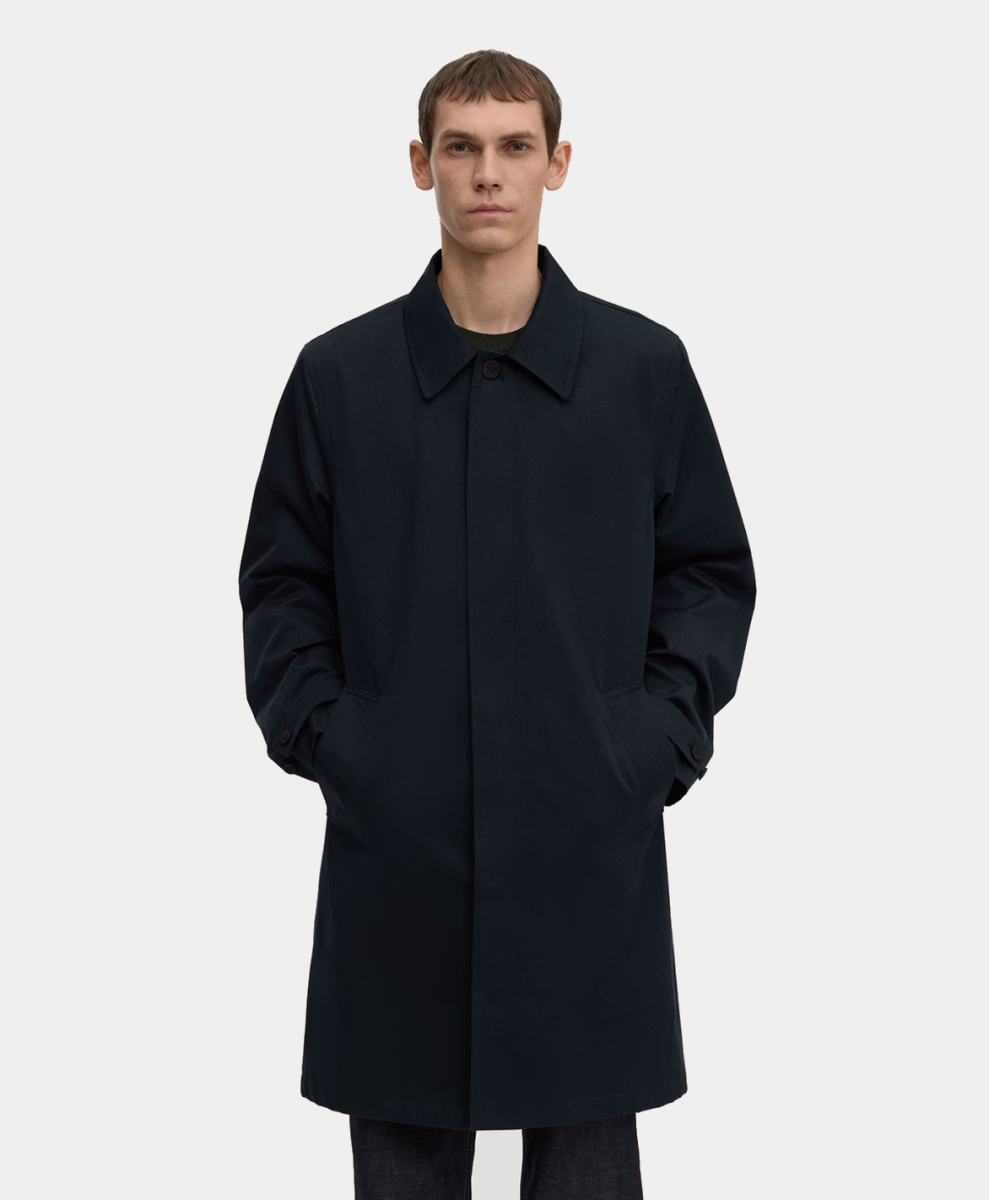
Not everyone wants an overcoat that reaches their knees. If you spend a lot of time driving, commuting or moving between indoor and outdoor spaces, a shorter coat can be a more practical choice.
Enter the car coat. As the name suggests, this style developed around the needs of motorists, offering warmth and weather protection without the bulk and length of a traditional overcoat. Modern versions typically feature a simple single-breasted front, a shirt-style collar and a hem somewhere around the upper to mid-thigh.
The appeal lies in its versatility. A clean wool or cotton car coat can work with tailored trousers and a blazer, but it looks equally at home with jeans and knitwear.
There is one important caveat, though: length. Many contemporary car coats are too short to cover a suit jacket completely. If you're planning to wear one over tailoring, look for a slightly longer version and try it on with the jacket you intend to wear underneath.
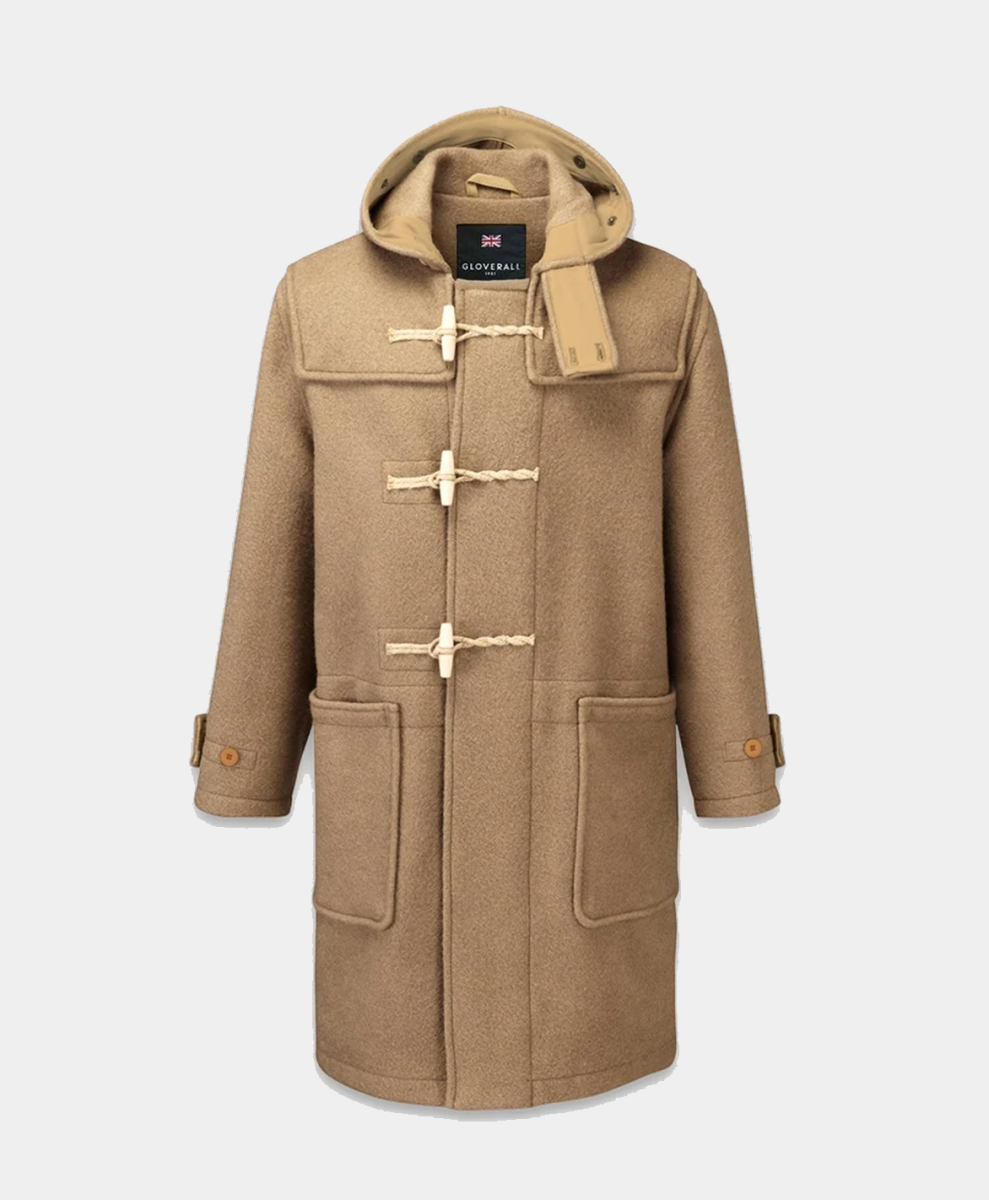
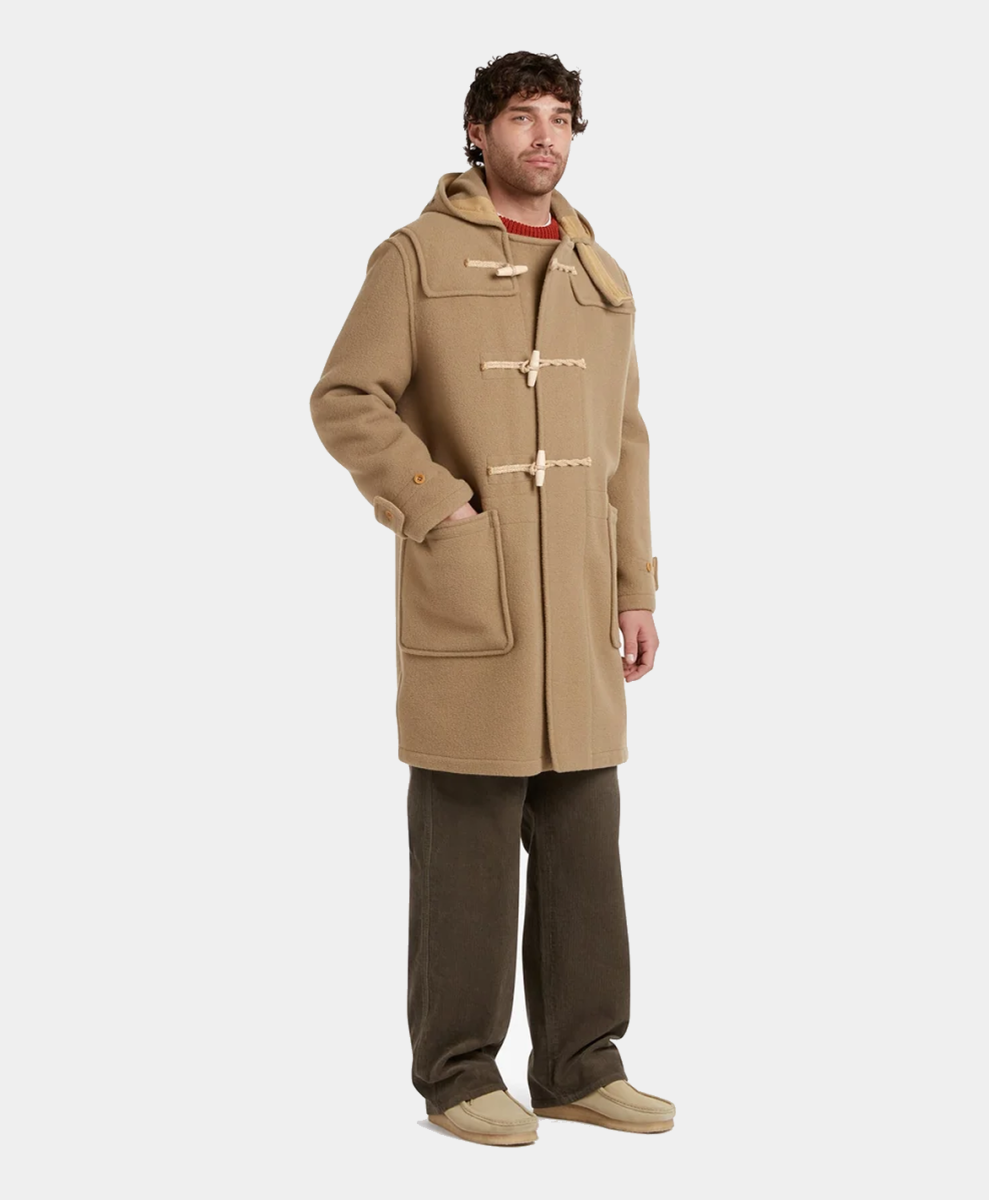
Duffle coat
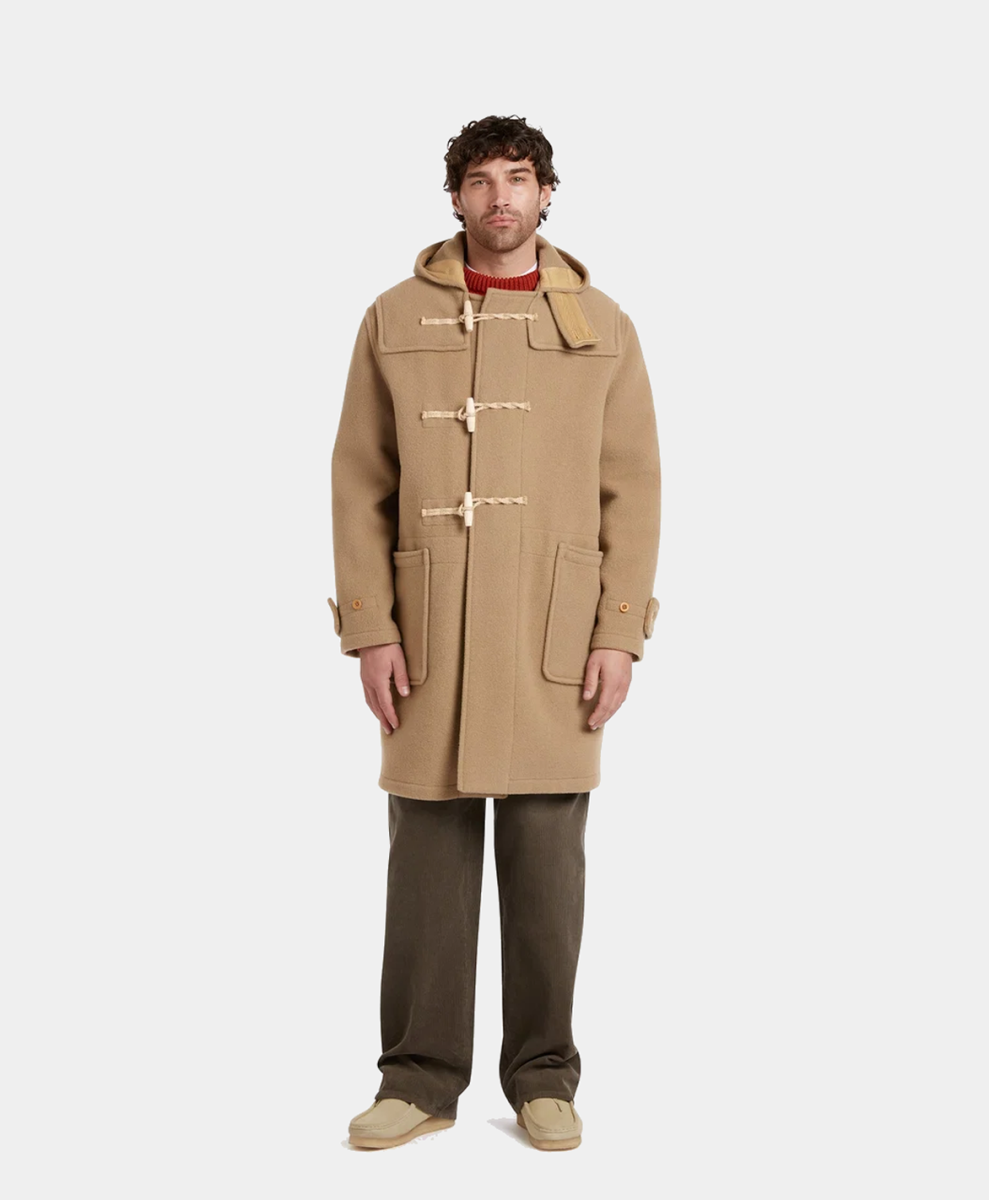
The duffle coat is probably the most casual option on this list, but that doesn't mean it has no place alongside tailoring. Its thick wool fabric, generous hood and distinctive toggle fastenings give it a character quite unlike that of a conventional overcoat.
The style has strong associations with British military clothing, particularly the Royal Navy, before becoming a favourite of students, artists and various other people with little interest in dressing conventionally.
It's best reserved for relaxed tailoring. A navy duffle coat over a grey flannel suit, for example, can look excellent, particularly when paired with a chunky scarf and substantial leather shoes. Similarly, a camel version can work well with tweed jackets and corduroy trousers.
The important thing is to embrace the coat's casual character rather than trying to make it something it isn't. A duffle coat probably isn't the best choice for an important corporate meeting, but for everyday winter business casual dressing, it can be surprisingly effective.
How to wear a coat over tailoring
Make sure it's long enough
As a general rule, your outerwear should cover the hem of your suit jacket. This creates a cleaner silhouette and avoids the awkward appearance of multiple hems competing with one another. Longer coats are generally easier to get right, although a properly proportioned car coat or covert coat can work too.
Leave room for the jacket underneath
A coat that fits perfectly over a T-shirt might be completely unsuitable over a suit. Tailored jackets add bulk around the shoulders, chest and upper arms, so make sure your outerwear has enough space to accommodate them comfortably. When shopping, always try coats on over the sort of tailoring you actually intend to wear.
Match the level of formality
A sharply tailored business suit generally looks best with equally refined outerwear, such as a Chesterfield, polo coat or classic mac. More relaxed tailoring offers greater freedom to experiment with field jackets, duffle coats and other casual styles. There are exceptions, of course, but understanding the distinction is a useful starting point.
Pay attention to proportions
A slim, structured suit and a dramatically oversized coat can look mismatched, just as a narrow overcoat can feel at odds with wide-legged, relaxed tailoring. The aim isn't necessarily to match the silhouettes exactly, but to make sure they complement one another.
Don't overlook fabric
Wool is the obvious choice for winter, offering warmth, structure and a natural affinity with tailoring. Cotton gabardine and technical fabrics are better suited to milder, wetter conditions. Texture matters too. A smooth wool overcoat creates a more formal impression, while tweed, brushed wool and other textured fabrics can make a suited outfit feel softer and more relaxed.
Think beyond black
Black might seem like the safest option, but navy, charcoal, camel, olive and brown are often more versatile than people realise. A camel coat over a navy suit is a classic for good reason, while olive works particularly well with grey and brown tailoring. You don't need a wardrobe full of overcoats, but choosing a colour that complements the suits you already own will make a significant difference.